
Last updated November 23, 2026
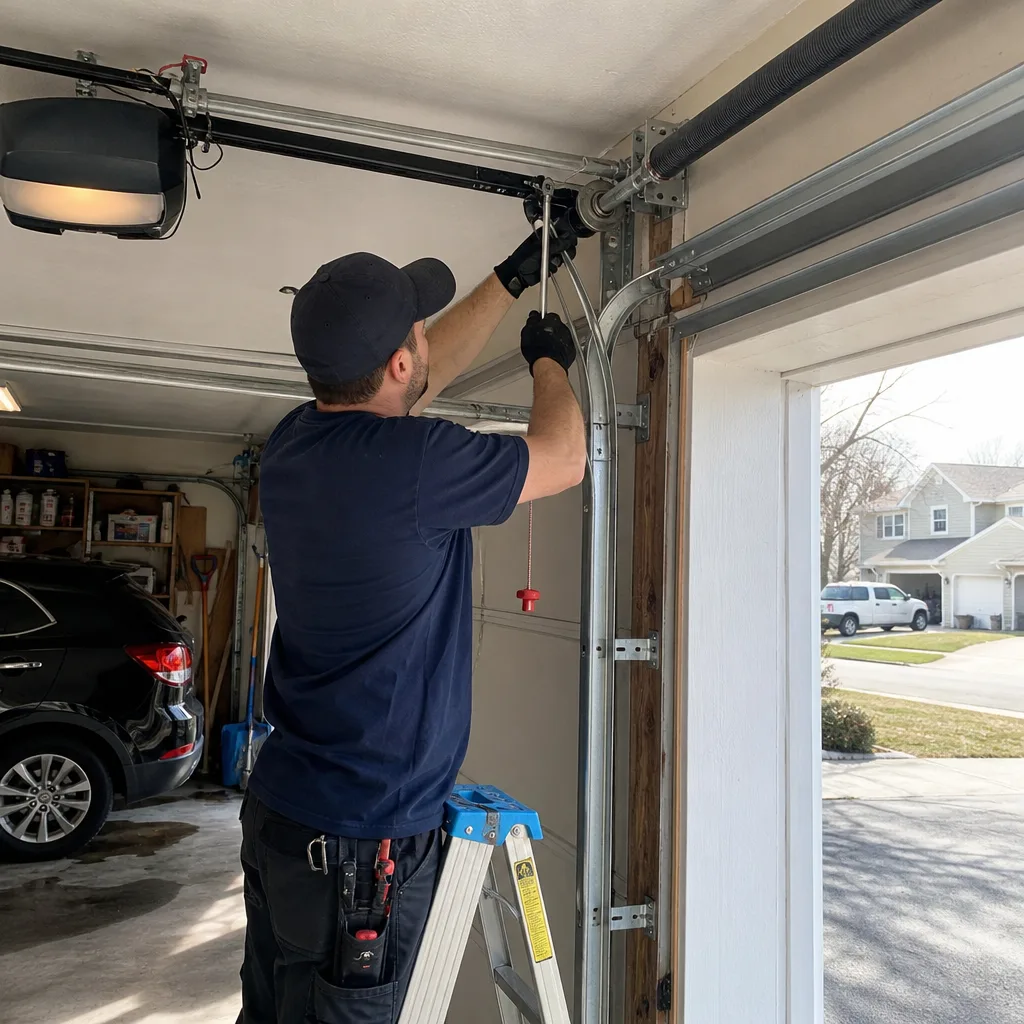
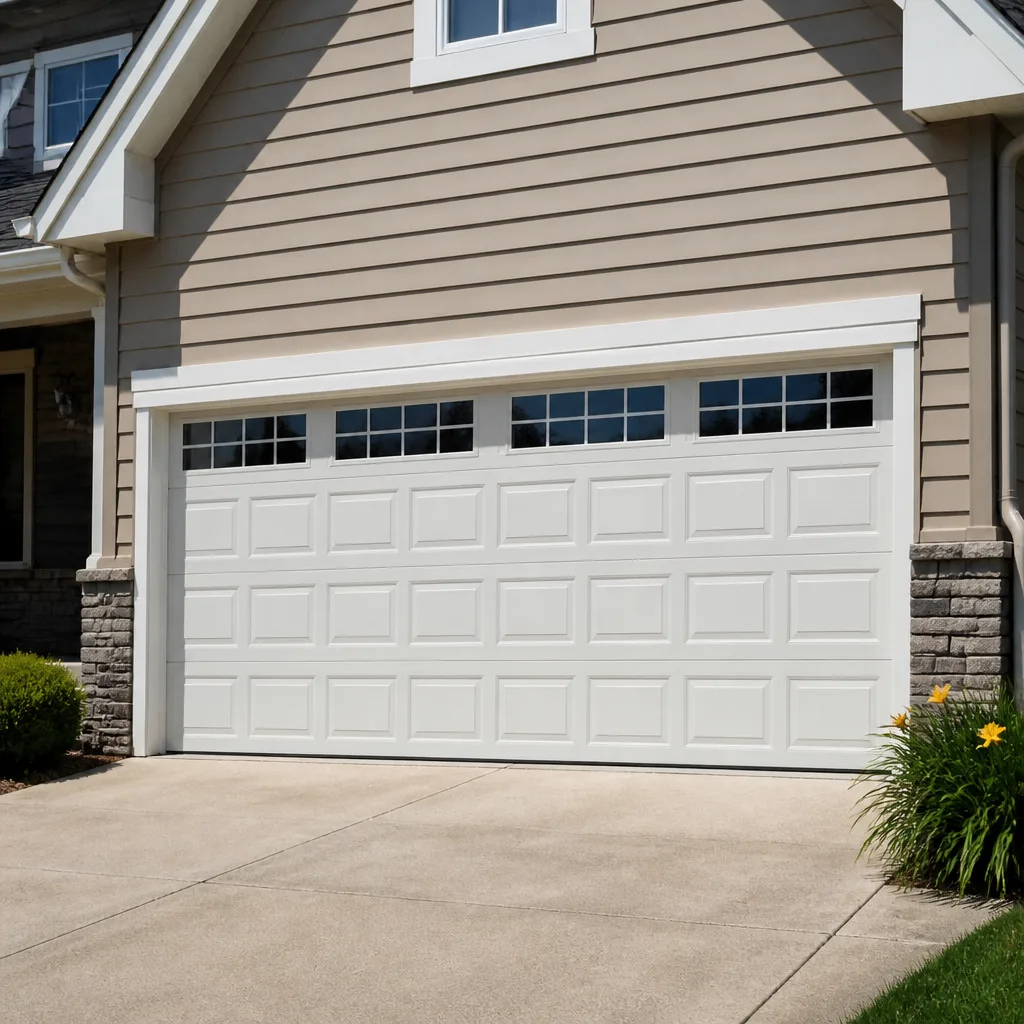 Raised-panel steel
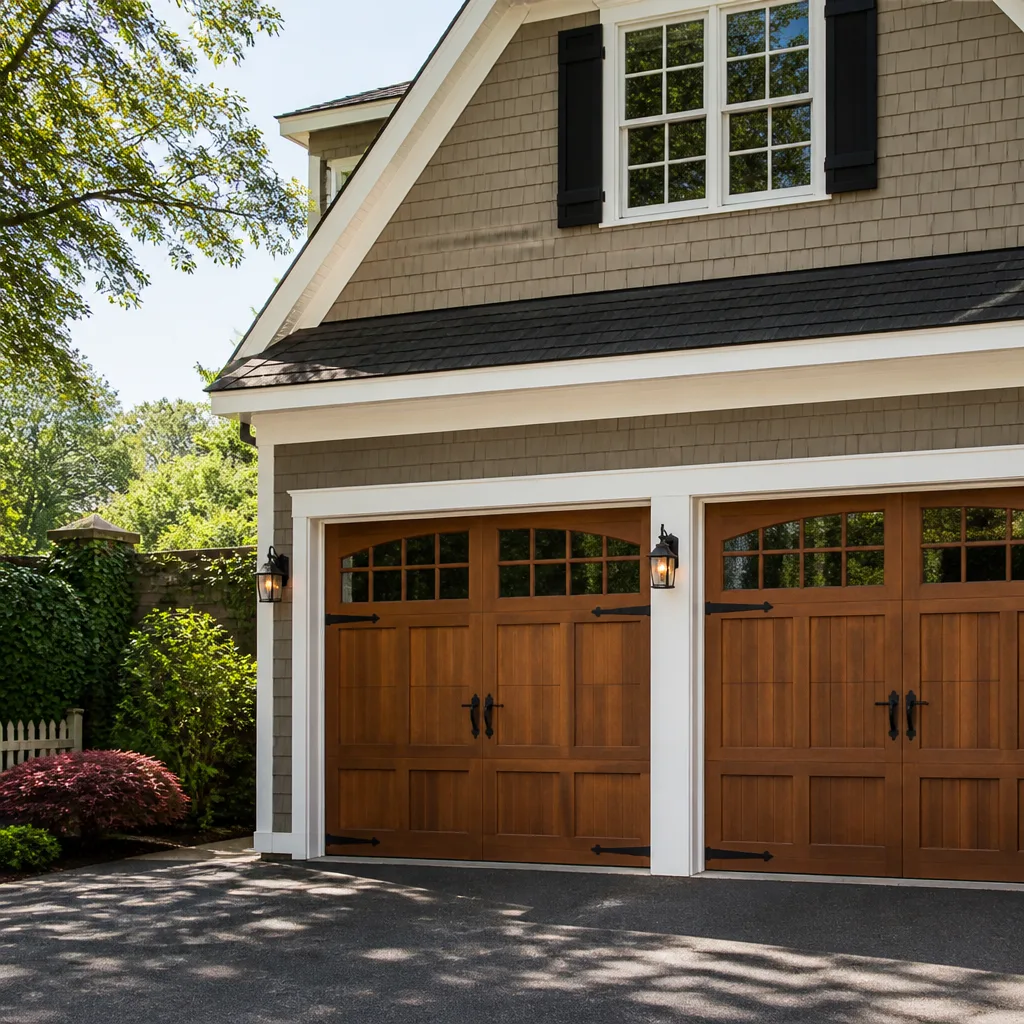 Carriage house
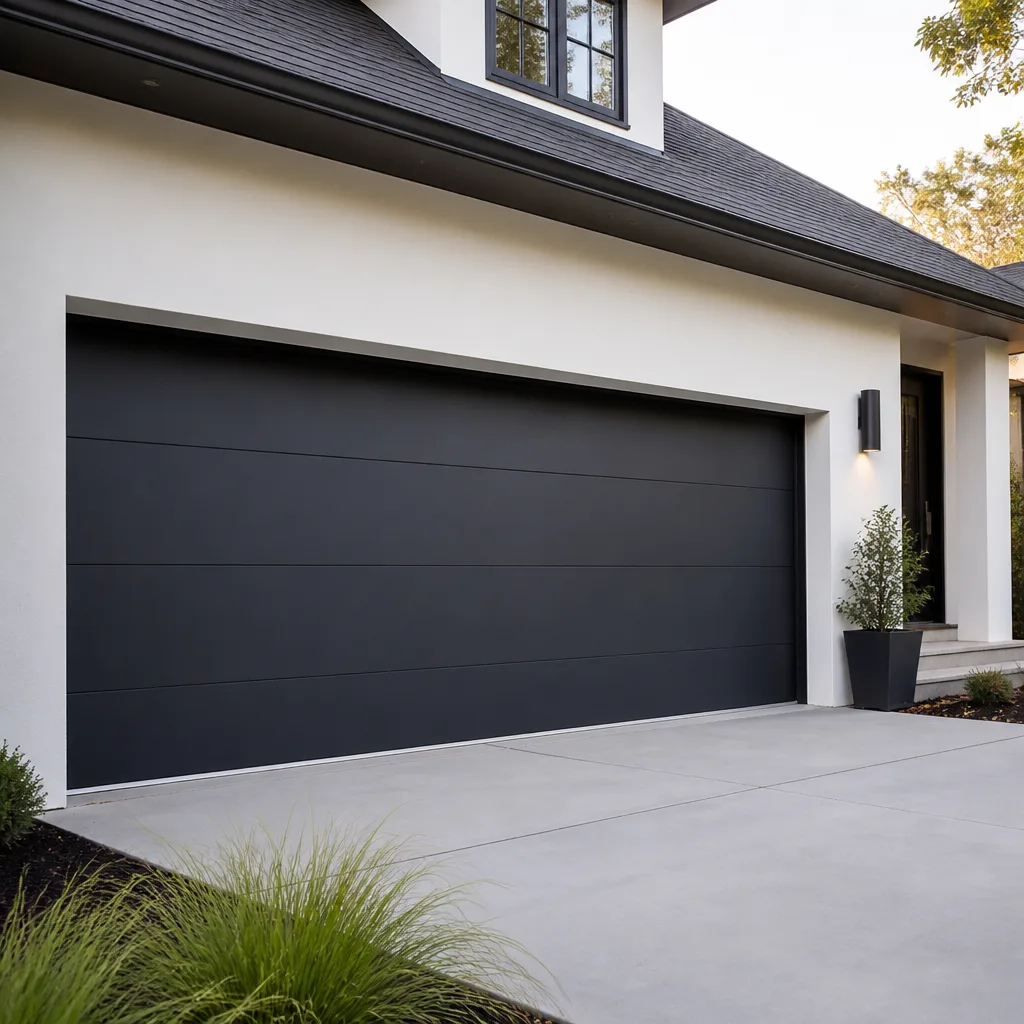 Modern flush
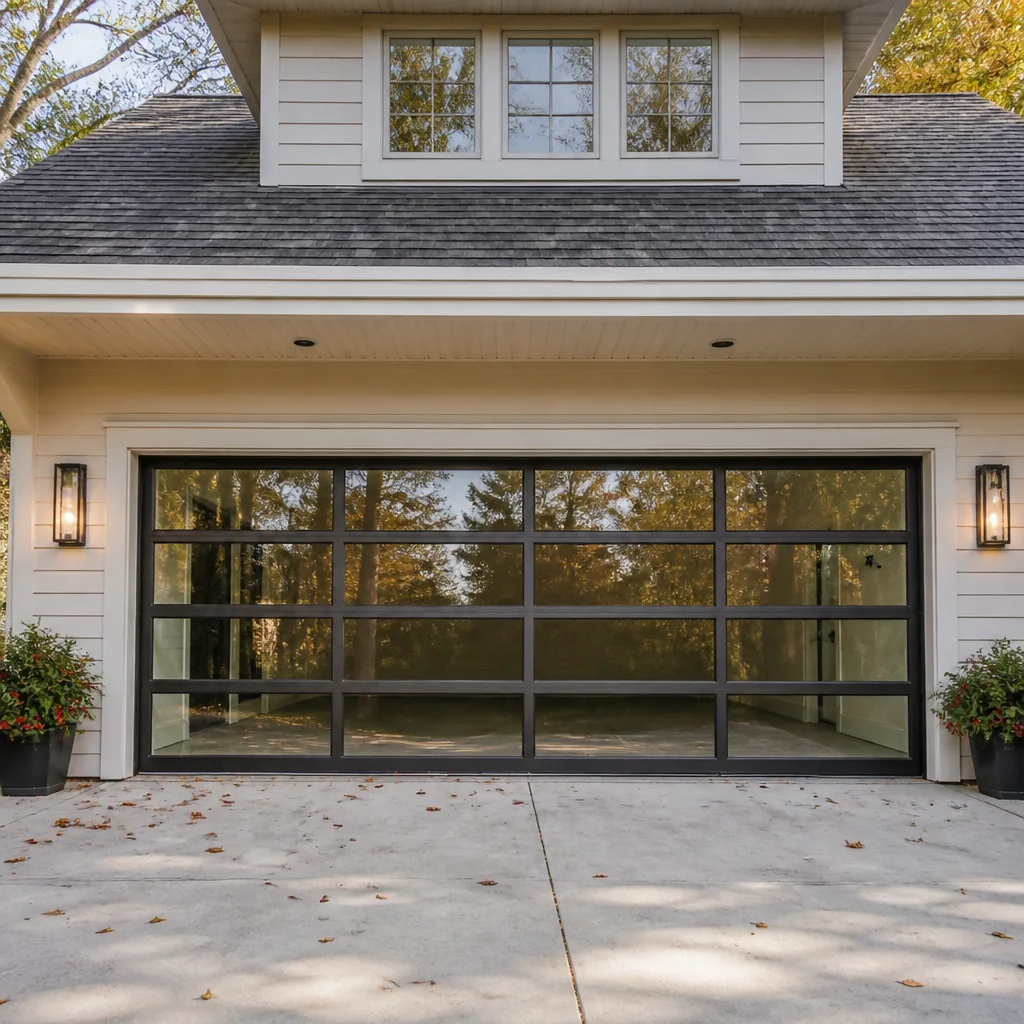 Full-view glass
 LiftMaster openers
 Chamberlain openers
Full 25-point door and opener safety check with every visit - springs, cables, rollers, tracks, and your LiftMaster or Chamberlain opener included
You get a price before we start. It does not change when the pro arrives.
Get your free estimateDIY vs Professional Garage Door: The Glen Burnie Homeowner’s Decision Guide
Most garage door advice online treats the whole system as untouchable, which is wrong, and a smaller share treats it all as fair game, which is worse. Torsion springs store hundreds of pounds of energy, and that’s the reason spring repair sends homeowners to the emergency room every year, not a line a lawyer added to a manual. But a frayed bottom seal or a sensor that drifted out of alignment has no business costing you a service call. This guide draws the line task by task, so a capable Glen Burnie homeowner knows exactly what to handle and what to hand off.
Quick Answer
Roughly half of garage door maintenance and troubleshooting is genuinely homeowner work: seals, lubrication, sensor alignment, remote and keypad programming, and a visual inspection. The other half belongs to a trained technician: torsion springs, extension springs, cables, drums, bent or twisted tracks, and any repair on a door that has come off its track. The dividing line is stored energy and structural load, not difficulty.
Styles & brands we work with
- Raised-panel steel
- Carriage house
- Modern flush
- Full-view glass
- LiftMaster openers
- Chamberlain openers
Table of Contents
- Where the line sits: a task-by-task breakdown
- Why springs and cables are a technician’s job
- The DIY-safe tasks and what tooling they really need
- The hidden cost of a DIY mistake that goes wrong quietly
- Is a previous owner’s DIY repair behind your current problem?
- The opener task that looks simple and isn’t
- What repair work typically costs in Glen Burnie
- How to decide in five minutes
Where the line sits: a task-by-task breakdown
The fastest way to settle the DIY question is to sort the job before you pick up a tool. If it touches stored spring tension or the cables and drums that manage that tension, it’s technician work. If it touches the door surface, the seal, the track’s alignment or the electronics, it’s usually yours to handle.
Here’s how we’d sort the common jobs:
- Homeowner territory: bottom weather seal replacement, hinge and roller lubrication, safety sensor alignment and lens cleaning, remote and wireless keypad programming, tightening exposed hinge and bracket bolts, and clearing obstructions from the track.
- Technician territory: torsion spring replacement, extension spring replacement, cable replacement, cable drum work, track straightening or realignment, panel replacement, and any diagnosis on a door hanging off its track.
- Gray zone, handle with care: roller replacement, hinge replacement on a door under tension, and anything involving the opener’s rail, chain or belt tension. These are doable for a careful homeowner with the right tools, but a mistake can put the door out of balance or damage the operator.
In Glen Burnie, a lot of the housing stock is older, and that shifts the gray zone. A door that’s been sitting in a house off Baltimore Annapolis Boulevard for a few decades may have hinges that are rusted solid. What looks like a ten-minute swap can turn into a stripped bolt and a bent panel. When a fastener won’t move, stop. That’s the signal the job has crossed the line.
One more sorting rule: if the door is currently stuck open with a car inside, or stuck closed with a car in the driveway, don’t start troubleshooting. Call. A stuck door is a livable problem when someone with the right training handles the release. It’s a much bigger problem when a homeowner forces it.
Why springs and cables are a technician’s job
A torsion spring is a wound steel coil holding the entire weight of the door in tension. A standard double door weighs in the neighborhood of a small motorcycle, and the spring is what balances that weight so a person can lift it with one hand. When you unwind or remove a spring, you’re releasing that stored force. There is no safe way to do that without the proper winding bars and the training to use them, and there is no partial approach. It either releases under control or it doesn’t.
The injuries that come out of DIY spring repair follow a pattern. A winding bar slips, or a spring snaps and the bar whips out of the hand, or the door drops while someone has an arm in the track. Cables add their own hazard because they’re under tension too, and a cable that lets go can whip across the garage. Cable drums are worse, because a drum that’s misaligned or improperly seated will let the cable jump, and the door comes down.
A trained technician brings specific things to that job:
- Winding bars sized to the spring and a controlled procedure for releasing tension.
- A way to measure and match the replacement spring to the door’s actual weight, which determines what the door needs. An undersized or oversized spring wears out early and puts stress on the opener and the door itself.
- The ability to check and reset cable tension and drum alignment at the same time, because a spring failure and a cable failure often travel together.
- Knowledge of the door’s brand and hardware. We work on Amarr, Wayne Dalton and Raynor doors routinely, and the spring and cable setups differ enough that the wrong assumption costs time and sometimes parts.
Nothing about that list is a knock on a homeowner’s competence. It’s a statement about the physics. Spring work is the one task in this trade where a small mistake carries immediate injury risk, and that’s why we treat garage door spring repair as a named service rather than a line item buried in a general repair call.
The DIY-safe tasks and what tooling they really need
Being honest about the safe half matters as much as being honest about the dangerous half. Plenty of garage door upkeep is well within a homeowner’s reach, and paying a service call for it is money you don’t need to spend. Here’s what “handy” actually looks like for these jobs.
Weather seal replacement
This is the most homeowner-friendly job on the whole door, and in Glen Burnie it’s also the most frequently needed. A bottom seal that’s cracked or flattened lets in water, insects and cold air, and it makes the door louder as it closes. You’ll need a replacement seal sized to your door’s width, a utility knife, a screwdriver or socket set, and a way to reach the bottom of a closed door safely. The seal slides or screws into the bottom section depending on the door. Take the old piece off, match the profile, and fit the new one. Allow a clean hour the first time.
Lubrication
A garage door wants a non-silicone lubricant on hinges, rollers and springs, and a dry silicone spray on the track itself. Grease on the track just attracts grit and slows the door down. The job takes fifteen minutes and should happen a couple of times a year. Don’t lubricate a plastic roller; replace it instead. And never lubricate a spring you’re not sure is in good shape without checking it first. If the spring looks cracked or is making noise, that’s a call.
Safety sensor alignment
If the door closes partway and reverses, or won’t close at all, the safety sensors near the floor are the first place to look. Clean the lenses, check that the small indicator light on each sensor is solid rather than blinking, and confirm they’re aimed at each other. A sensor knocked out of alignment by a trash can is a two-minute fix and one of the most common reasons a door acts up. If the light won’t go solid after cleaning and realignment, the sensor or the wiring may be failing, and that’s worth a diagnostic.
Remote and keypad programming
Programming a remote into a LiftMaster, Chamberlain, Genie or Craftsman opener is a press-and-hold sequence, and most manuals walk through it in a page or two. The trick is knowing which method your opener uses, which depends on the vintage. Which brings us to the section below, because this is where “simple” gets complicated.
The hidden cost of a DIY mistake that goes wrong quietly
The DIY mistakes that hurt most aren’t the ones that break something immediately. They’re the ones that leave the door running but out of balance or under the wrong tension. Those problems are quiet, and they cost money slowly.
Here’s what a poorly set spring tension actually does:
- It wears the opener out. If the spring isn’t carrying the door’s weight, the opener motor does it instead. The motor isn’t built for that, and it fails early. A $600 opener replacement is a common downstream cost of a $150 spring job done wrong.
- It stresses the door itself. A door lifting under unbalanced tension racks, meaning it twists slightly in the tracks. Racked doors wear rollers and hinges, and eventually crack panels at the hinge point.
- It damages the cables and drums. Uneven tension means one cable takes more load than the other. That shortens cable life and puts the drum under strain. A cable that fails is a door that falls.
- It masks the next failure. A door that’s out of balance feels and sounds normal for months. The first sign of a problem is often when something breaks.
Cable drum misalignment works the same way. A drum that’s not seated properly looks fine, but the cable rides unevenly and either frays or jumps. Neither outcome is something you can see from the outside.
This is why we care about balance when we do a repair. A proper technician checks the door’s balance after any spring or cable work, because the number on the invoice is only part of the cost. The rest is what happens to your opener and your door over the next year. If a door feels recently lighter or heavier than it used to, get it looked at before you run it hard.
Is a previous owner’s DIY repair behind your current problem?
If you bought a Glen Burnie home recently, there’s a decent chance something in the garage was fixed by the seller. Homeowners around here often tackle a garage door before a sale, and the work isn’t always done right. The result is a door that passes a walkthrough but starts acting up a year later.
The clues are specific. Look for these:
- Mismatched springs. The two torsion springs on a double door should look identical. Different wire thicknesses or different lengths mean someone replaced one side and left the other. That’s an unbalanced door, and it will fail.
- Fresh paint or tape over a spring. Springs don’t get painted. If there’s paint or tape on a coil, someone was covering a crack or hiding a replacement.
- Bolts that are stripped or missing. Check the hinges where they attach to the door panel, and the brackets at the top and bottom. A missing bolt in a hinge isn’t cosmetic; the hinge takes load.
- A door that isn’t level. Stand inside the garage and look at the gap between the bottom of the door and the floor. It should be even. A door that’s higher on one side is racked.
- A spring that’s the wrong size for the door. If the door is heavy to lift by hand (with the opener disconnected, and with care), the springs are undersized. That’s a common cheap fix.
- Rough or improvised wiring at the opener. Spliced low-voltage wire, a sensor mounted with tape, or a power cord run oddly all point to a homeowner patch.
What changes is the diagnosis. If the door has been running on a wrong-sized spring or a mismatched pair, replacing the obvious broken part won’t fix the underlying problem. The door needs to be brought back into balance first, which sometimes means replacing both springs at once instead of one. That’s a bigger job, but it’s the one that lasts. When you’re dealing with garage door repair on an inherited door, tell the technician upfront that the door may have been worked on before. It changes what we look at.
The opener task that looks simple and isn’t
Programming a new remote should be the easiest job in this guide. On plenty of Glen Burnie doors, it isn’t, and the reason has to do with radio frequencies and building age.
Garage door openers operate on a handful of frequencies, and the older ones use technology that’s less secure and less tolerant of interference. A house built decades ago may have an opener that’s been there since the door was new, using a fixed-code system. Those openers don’t play well with modern remotes, and a universal remote may not have a compatible code. Worse, older fixed-code openers can be interfered with by newer wireless devices in the neighborhood, which shows up as a remote that “sometimes” works or an opener that won’t respond until you’re right next to it.
Brand compatibility adds a second layer. A LiftMaster remote won’t program into a Genie opener, and a Chamberlain remote won’t program into a Craftsman system, even though the brands look related to a shopper. That’s not a defect. It’s a different radio design. If you buy a remote off the shelf without confirming compatibility, you’re gambling on a return.
The one task we’d tell you not to DIY is replacing the opener itself. The door is a moving load, the opener is attached to it, the safety sensors have to be mounted and aligned correctly, and the close force has to be set within safe limits. A do-it-yourselfer can get the motor mounted and the door still won’t be safe. If a remote won’t program after two attempts, or if the opener is old enough that parts aren’t available, call us for garage door opener repair. We’ll tell you whether it’s a programming problem or a replace-the-unit problem, and we’ll tell you the truth either way.
What repair work typically costs in Glen Burnie
Comparing DIY and professional costs is more honest with numbers on the table. The ranges below are typical for the Glen Burnie area and are estimates. The written estimate you receive sets the final price, and the price is quoted and agreed before any work starts.
- Bottom weather seal replacement: $90 to $200 installed, depending on door width and seal type. The material itself is $25 to $50 at a hardware store, so this is a job where a careful homeowner saves real money.
- Roller or hinge replacement: $100 to $250 installed for a set. The parts are inexpensive. The time and skill are the cost.
- Torsion spring replacement, one spring: $150 to $300 installed, including the spring, labor and balance check. A matched pair is usually replaced together, and a pair typically runs about twice the single-spring range.
- Cable replacement: $140 to $280 installed. Cables almost always come in pairs, and this job should always come with a spring and drum inspection.
- Track realignment: $125 to $275 installed, depending on whether any hardware needs replacing.
- Safety sensor replacement: $90 to $180 installed for a pair.
- Opener repair: $125 to $300, depending on the fault. A gear or logic board replacement is the higher end.
Look at the spring line. A DIY attempt might save part of that, but a wrong-sized spring or an unbalanced door puts wear on a $600 opener and shortens the life of the cables and door. The cascade is where the savings disappear. On a seal or a sensor, DIY wins cleanly. On a spring, it usually doesn’t. If you’re comparing options, a Glen Burnie Garage Door Repair Pros estimate is free, so there’s no cost to getting the professional number before you decide.
How to decide in five minutes
When you’re standing in the garage trying to figure out what to do next, work through this in order:
- Is the door off its track, stuck, or did a spring or cable just break? Call a professional. Don’t run the opener. Don’t force the door.
- Is the problem a seal, a sensor, a remote or routine lubrication? Handle it yourself. You’ll save a service call and learn your door’s quirks.
- Is the problem a grinding or snapping noise, a door that lifts heavy, or one that’s been acting up for weeks? Get a diagnosis. Noise and heaviness are signs of a balance or hardware issue.
- Did you just buy the house and don’t know the door’s history? Get it inspected once. Knowing what you have is worth the visit, and it’s the cheapest way to catch a seller’s quick fix before it fails.
- Is the door more than about fifteen years old and on original hardware? Have it looked at. Parts wear, and the older the hardware, the less warning you get.
None of that requires you to guess at whether you’re “handy enough.” It’s a sequence of yes-or-no questions, and the answer for the dangerous jobs is always the same no matter who’s asking.
Common Mistakes to Avoid
- Winding a torsion spring yourself. There’s no safe shortcut and no partial method. The springs are under hundreds of pounds of tension, and the injury risk is real and immediate. This is the one job that always belongs to a technician.
- Replacing one spring on a paired system. If the two springs are the same age and one fails, the other is usually close behind. Replacing one leaves the door unbalanced, and the new spring takes load it wasn’t sized for. Replace both.
- Greasing the track. Many Glen Burnie homeowners reach for a can of grease when a door gets noisy. Grease on a track collects grit and actually slows the door and wears the rollers. Use a dry lubricant on the track and save the grease for hinges and springs.
- Buying a remote without checking compatibility. A universal remote won’t program into every opener, and the older fixed-code units in some Glen Burnie homes are the biggest source of frustration. Confirm the model before you buy.
- Ignoring a door that reverses partway. A door that reverses on its own is either hitting the safety sensors or being tripped by something more serious. Cutting the sensors out or taping them over disables a real safety feature.
- Forcing a door that’s off its track. Pushing a stuck door back into place can bend a track, crack a panel or drop the door. If it’s off the track, leave it where it is and call.
- Not telling a technician the door’s history. If a prior owner worked on the door, say so. It changes the diagnosis and saves everyone time.
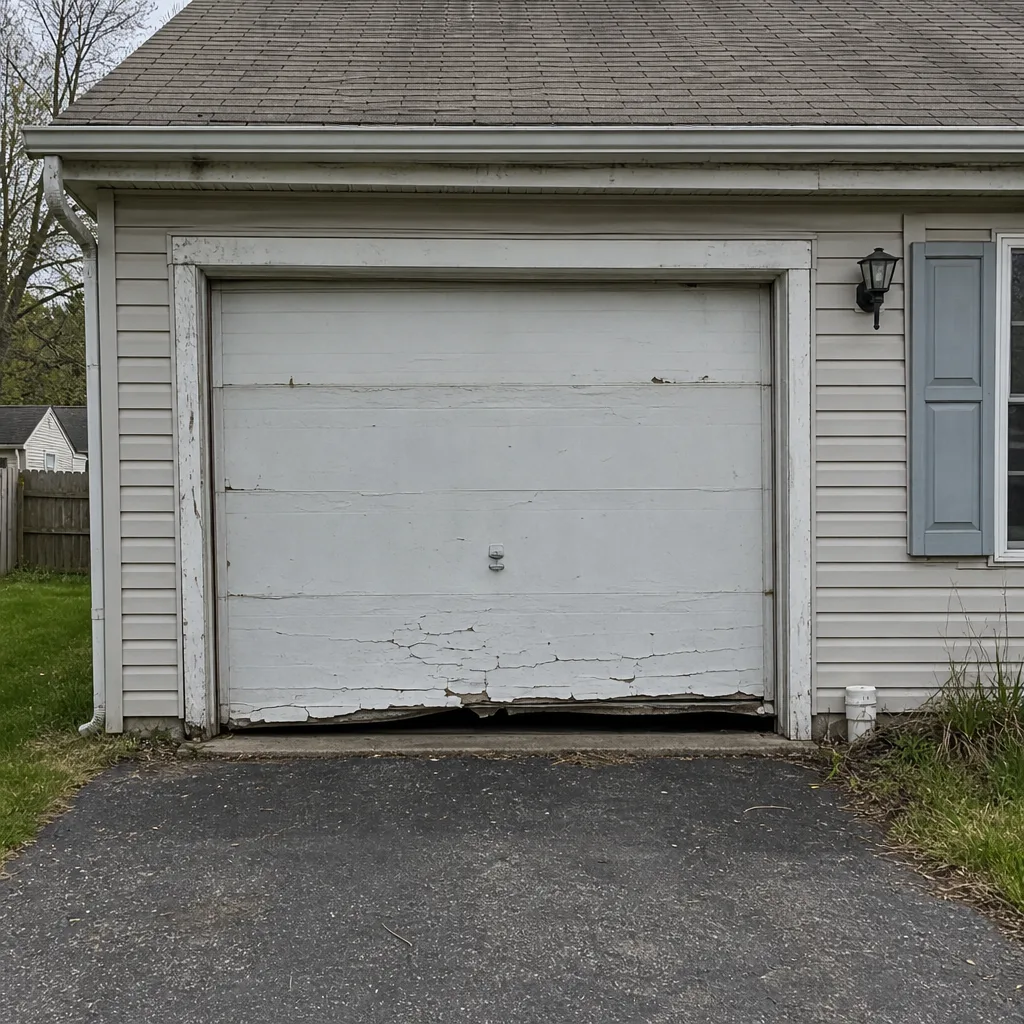
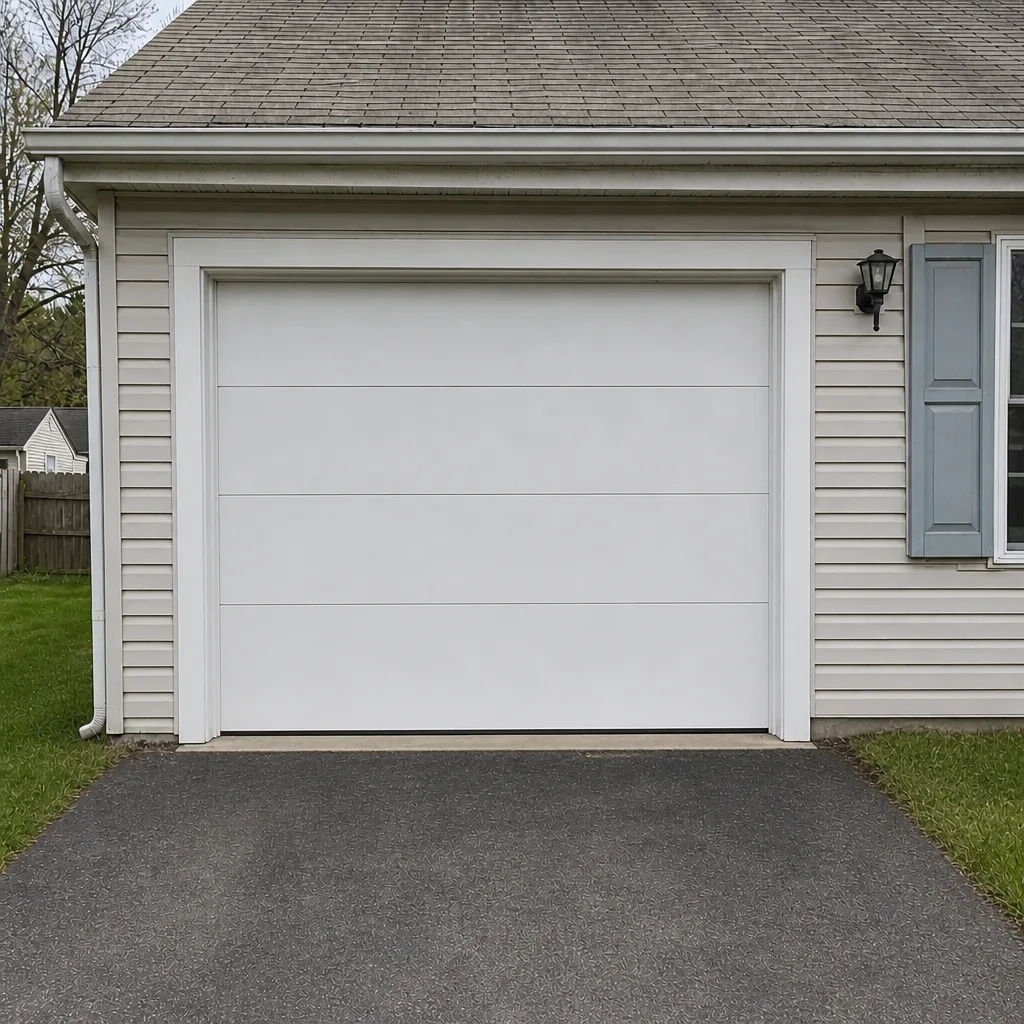
See the difference
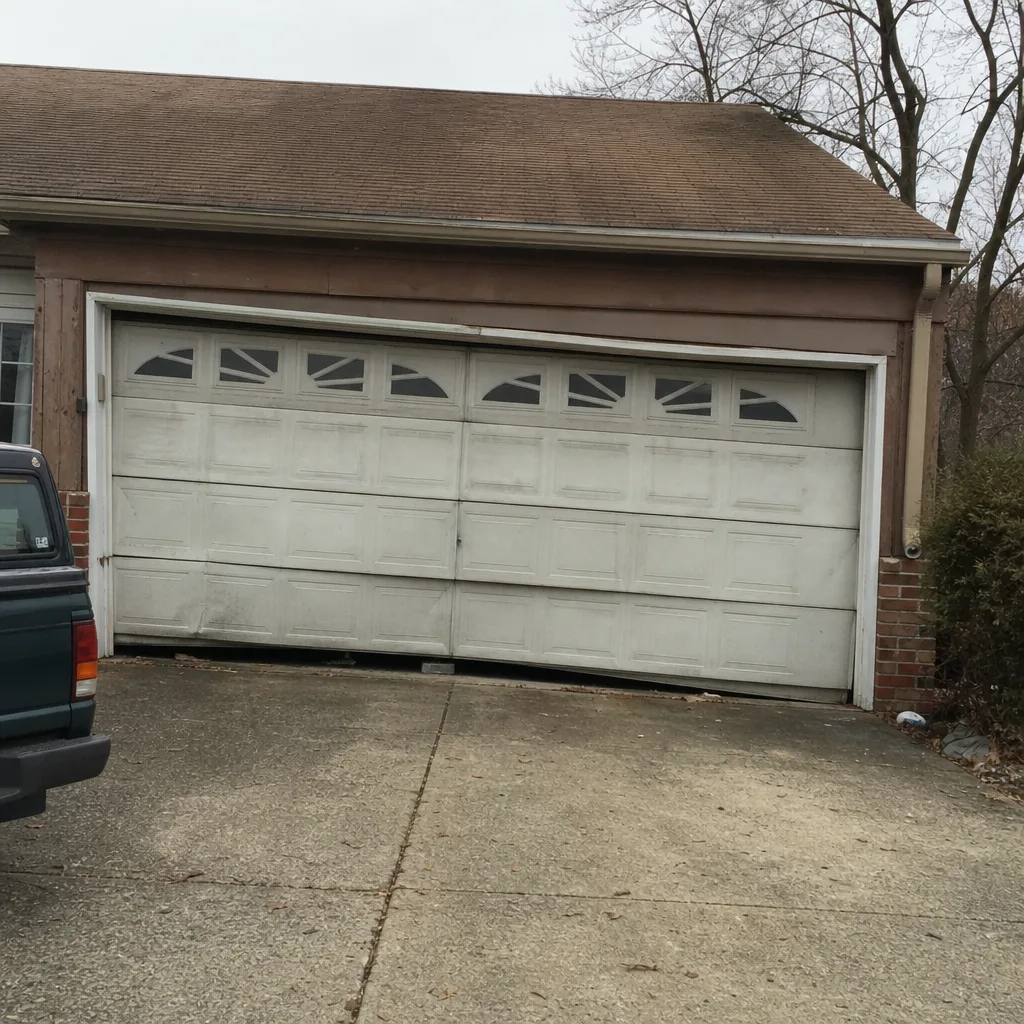 Before
 After
 Before
 After
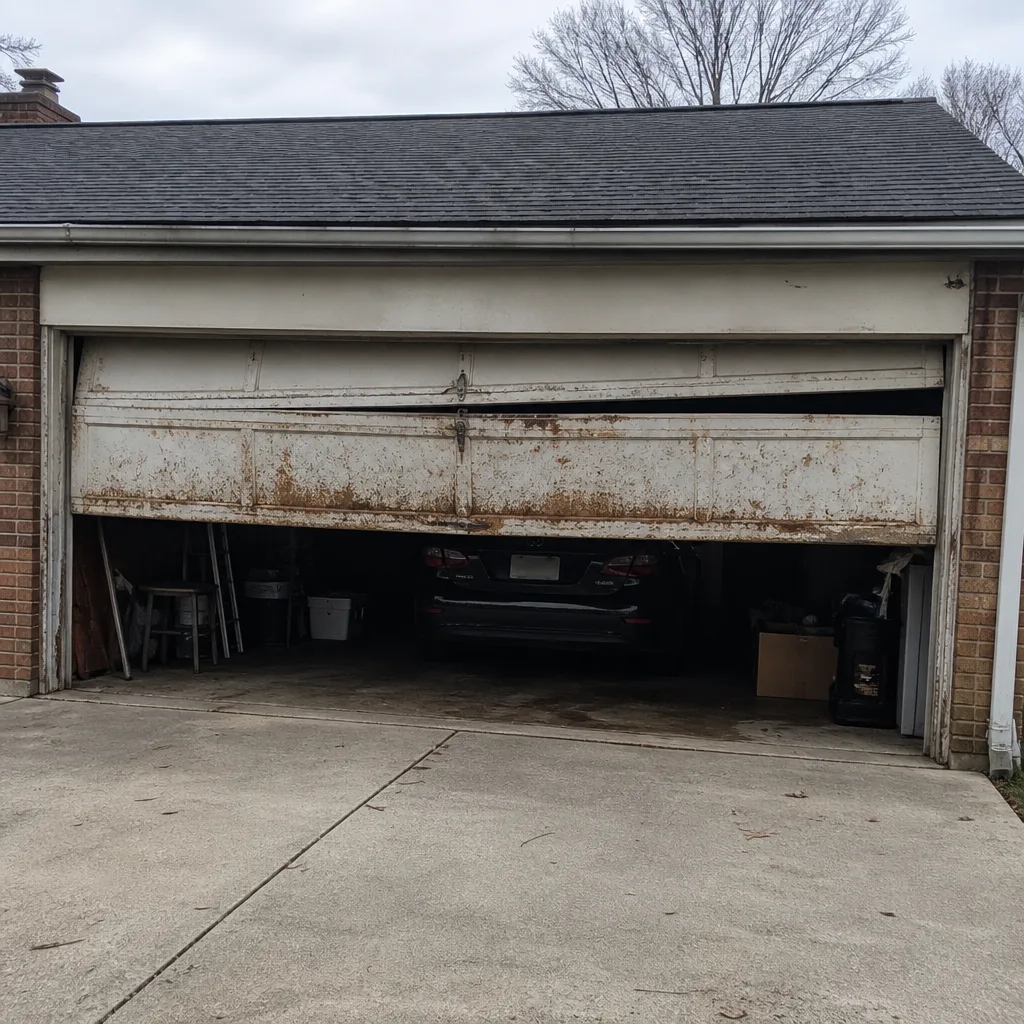 Before
 After
When to Call a Professional
The line isn’t about whether you can do a job; it’s about whether the job carries injury risk or structural load. Call when the door has lost tension, when a spring or cable has broken, when the door is off its track, or when something in the mechanism is making noise it shouldn’t. Call when the door is heavy to lift, since that’s an unbalanced door. Call when a previous DIY repair may be involved, because the fix is different. And call for the middle-zone jobs like roller and hinge replacement if you’re not confident you have the right tools for a door that’s under tension.
Glen Burnie Garage Door Repair Pros offers free estimates in Glen Burnie. Call (855) 550-7498. We answer 24/7. Fast dispatch, 7am-7pm, Sunday through Friday. Our technicians have up to 8 years of experience, and garage doors are all we work on.
Frequently Asked Questions
No. Torsion and extension springs are under hundreds of pounds of tension, and releasing that tension incorrectly can cause serious injury. The winding bars alone require training to use safely, and there’s no partial method. This is the one garage door job we consistently tell homeowners not to attempt.
Weather seal replacement, sensor alignment and cleaning, remote and keypad programming, routine lubrication and tightening exposed bolts are all reasonable homeowner jobs. If you can use a screwdriver and follow a manual, those are within reach. Anything involving the springs, cables, drums or track is the line.
Typical Glen Burnie estimates run $150 to $300 for a single torsion spring installed, $140 to $280 for a cable pair, and $125 to $275 for track realignment. A sensor pair is usually $90 to $180. Those are estimates, and the written estimate sets the final price. Call (855) 550-7498 for an exact quote; estimates are free.
Yes, and it’s often a quiet one. A door with wrong spring tension or a misaligned cable drum still runs, but the opener takes on the door’s weight, the cables wear unevenly, and the door slowly racks. The result is an early opener failure or a cable break months later. Those downstream costs usually exceed what the original job would have cost.
Summer heat makes seals and doors expand, and it’s common for a door to reverse or rub in July when it was fine in March. Start with sensor alignment and a check of the bottom seal, since those are homeowner jobs. If the door is still reversing after that, the problem is likely in the opener or the door’s balance, and it’s worth a diagnosis.
Look for mismatched springs, stripped or missing bolts on the hinges, a door that’s higher on one side, and any signs of paint or tape on a spring. Those clues suggest a homeowner patch. If you see them, tell the technician when you call. It changes the diagnosis and often means replacing a pair of parts rather than one.
For repair calls we do our best to get there the same day. Call (855) 550-7498, and we’ll give you the soonest opening. For a new door or a full replacement, the job involves measuring and ordering, so it’s scheduled rather than same-day.
The Bottom Line
The DIY question for garage doors comes down to two things: stored energy and structural load. Seals, sensors, lubrication and programming are yours to handle, and handling them saves money without risk. Springs, cables, drums, tracks and any door that’s hanging wrong belong to a trained technician, because the mistake carries injury risk and the cost of a quiet failure. If you just moved into a Glen Burnie home, get the door inspected once so you know what you inherited. And if a repair feels beyond you, the estimate is free, so there’s no reason to guess. Call (855) 550-7498 when you have the slightest doubt.
Written by the team at Glen Burnie Garage Door Repair Pros.