
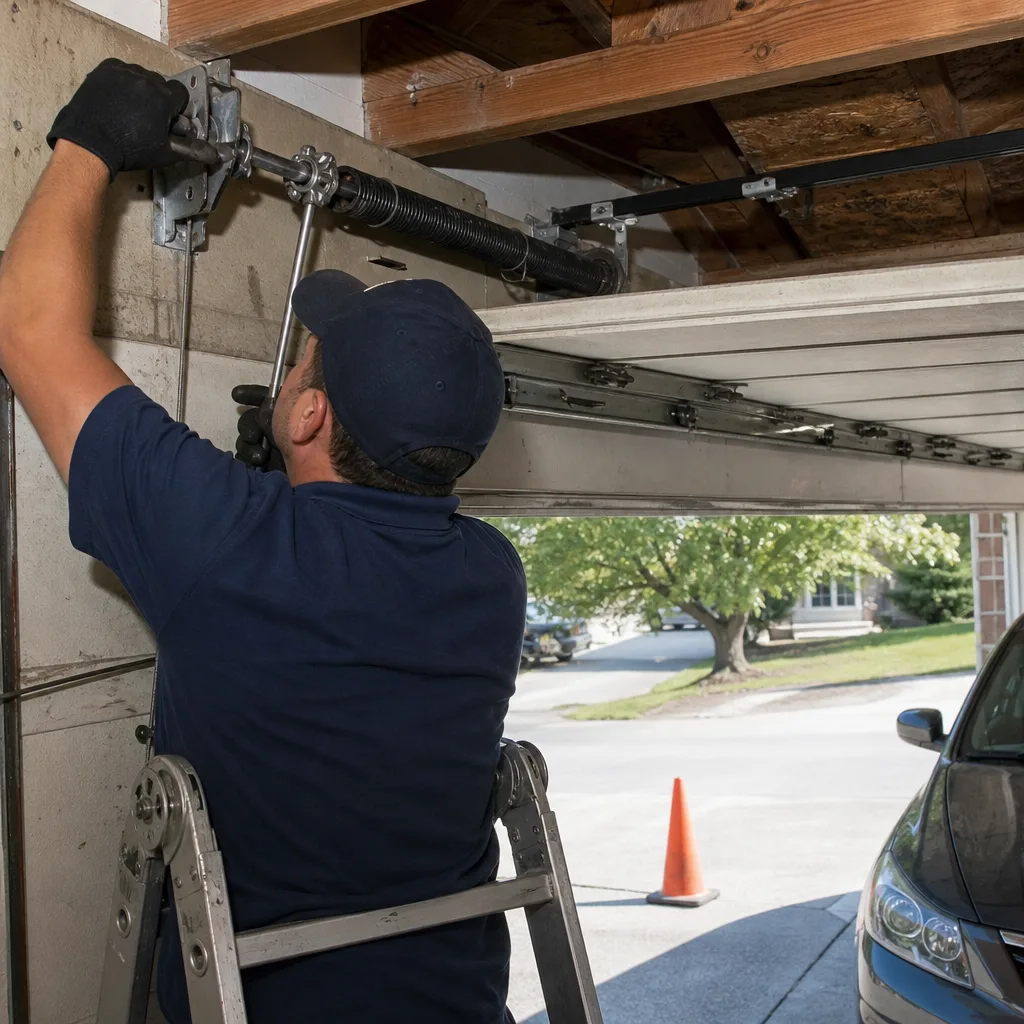
Last updated November 23, 2026
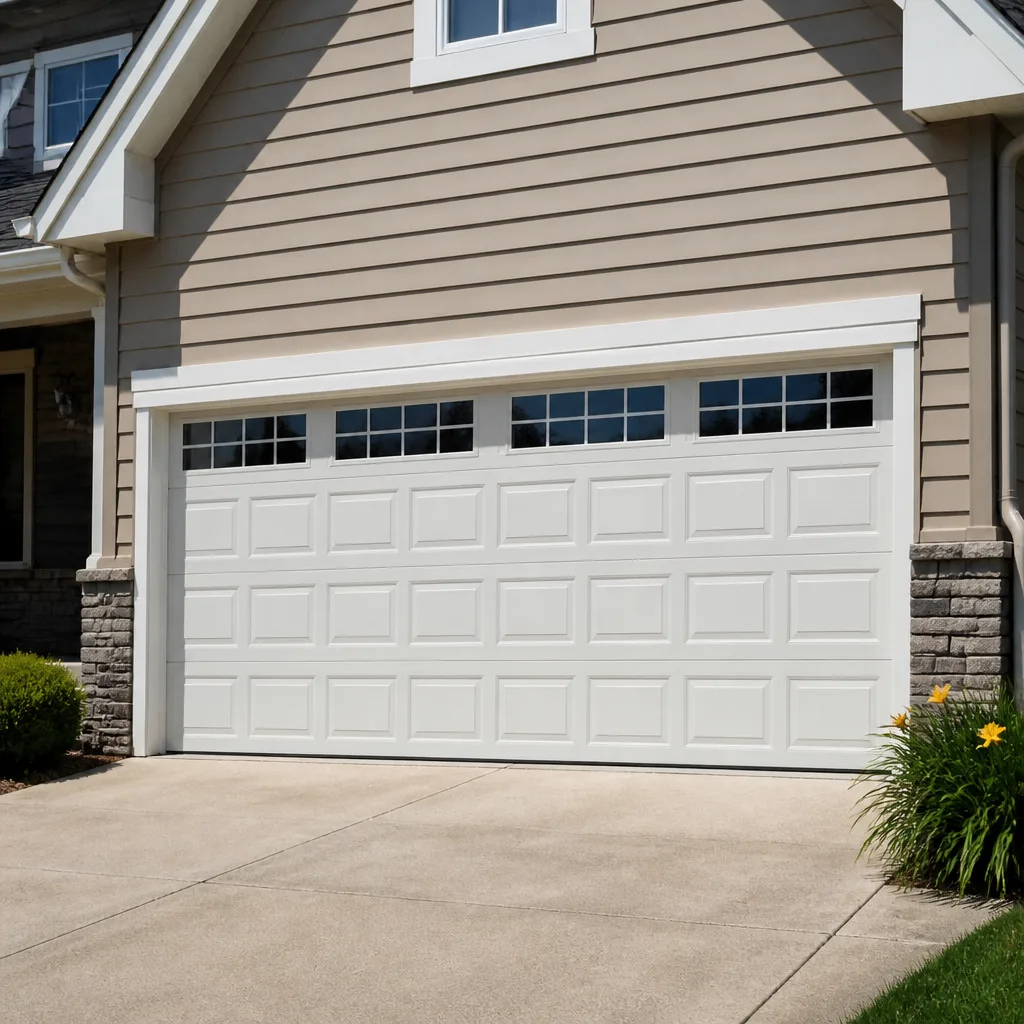 Raised-panel steel
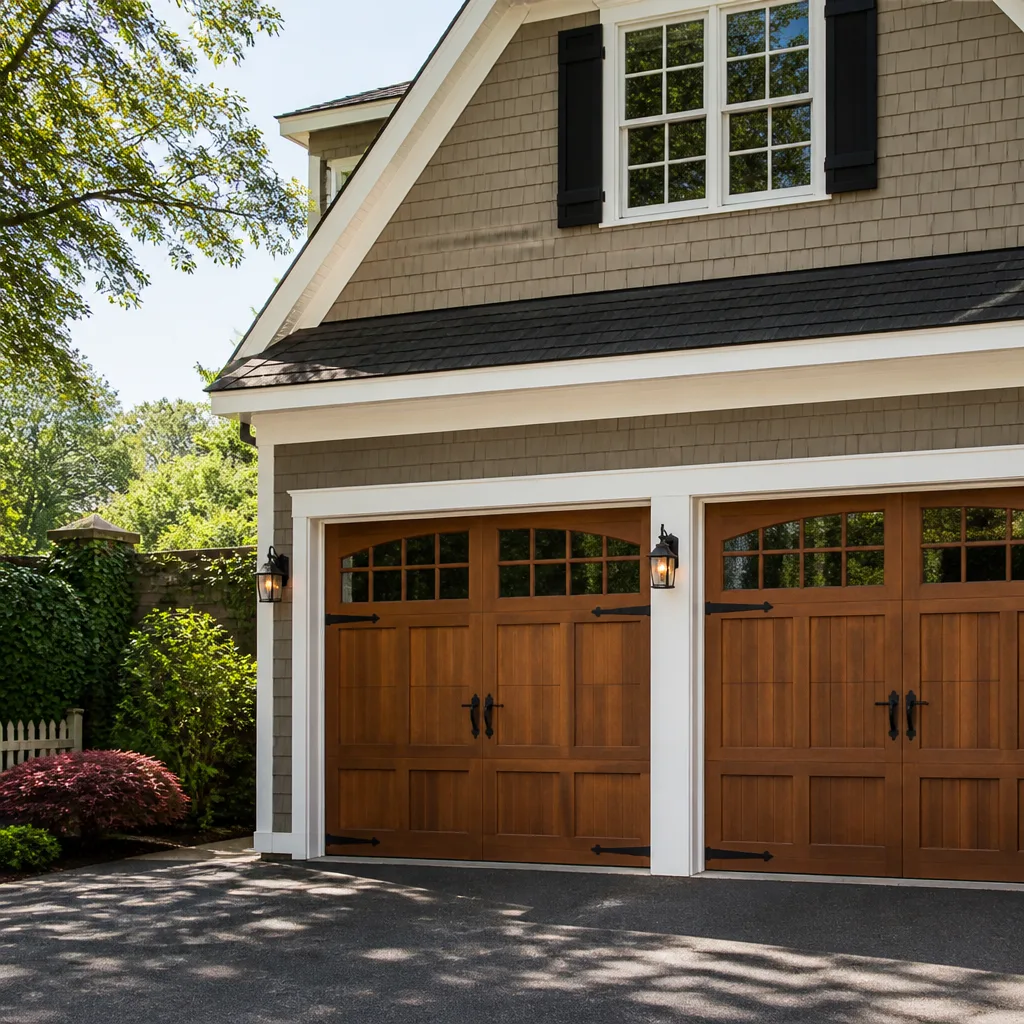 Carriage house
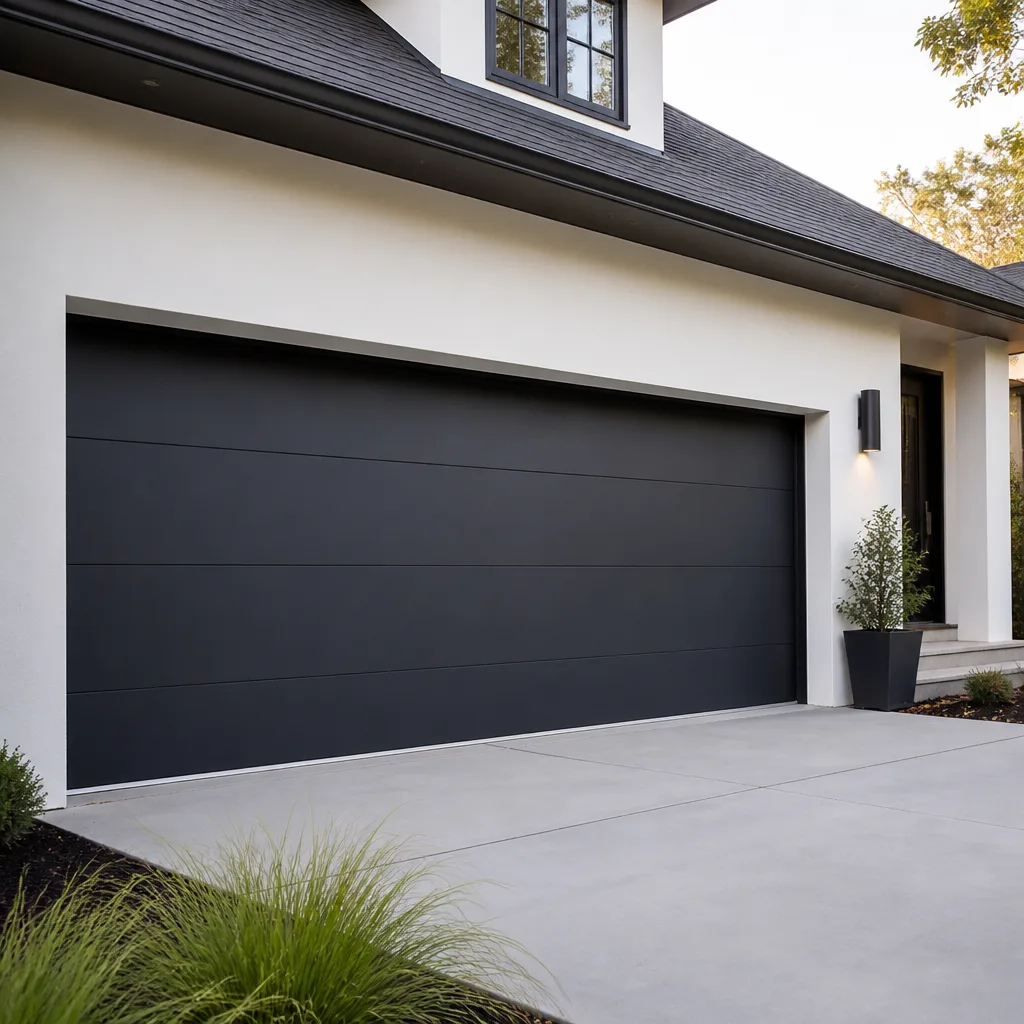 Modern flush
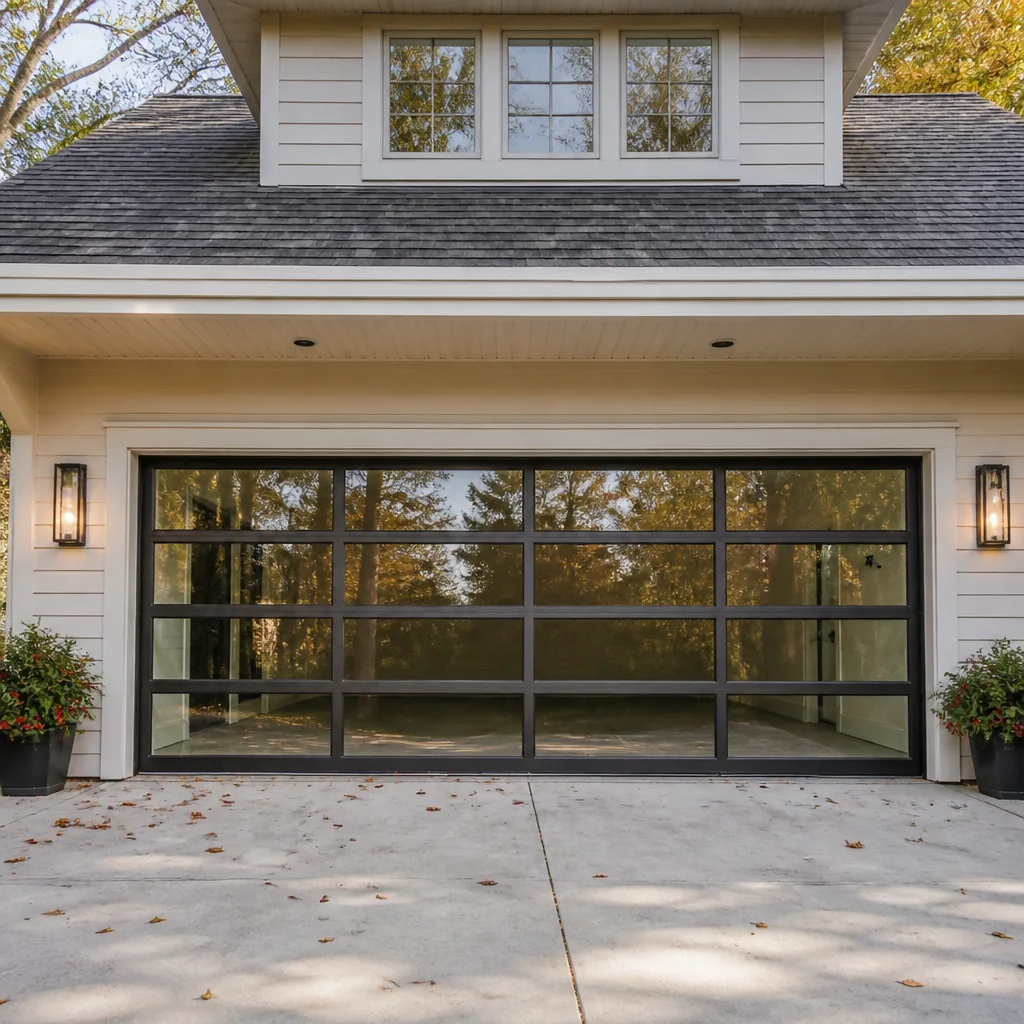 Full-view glass
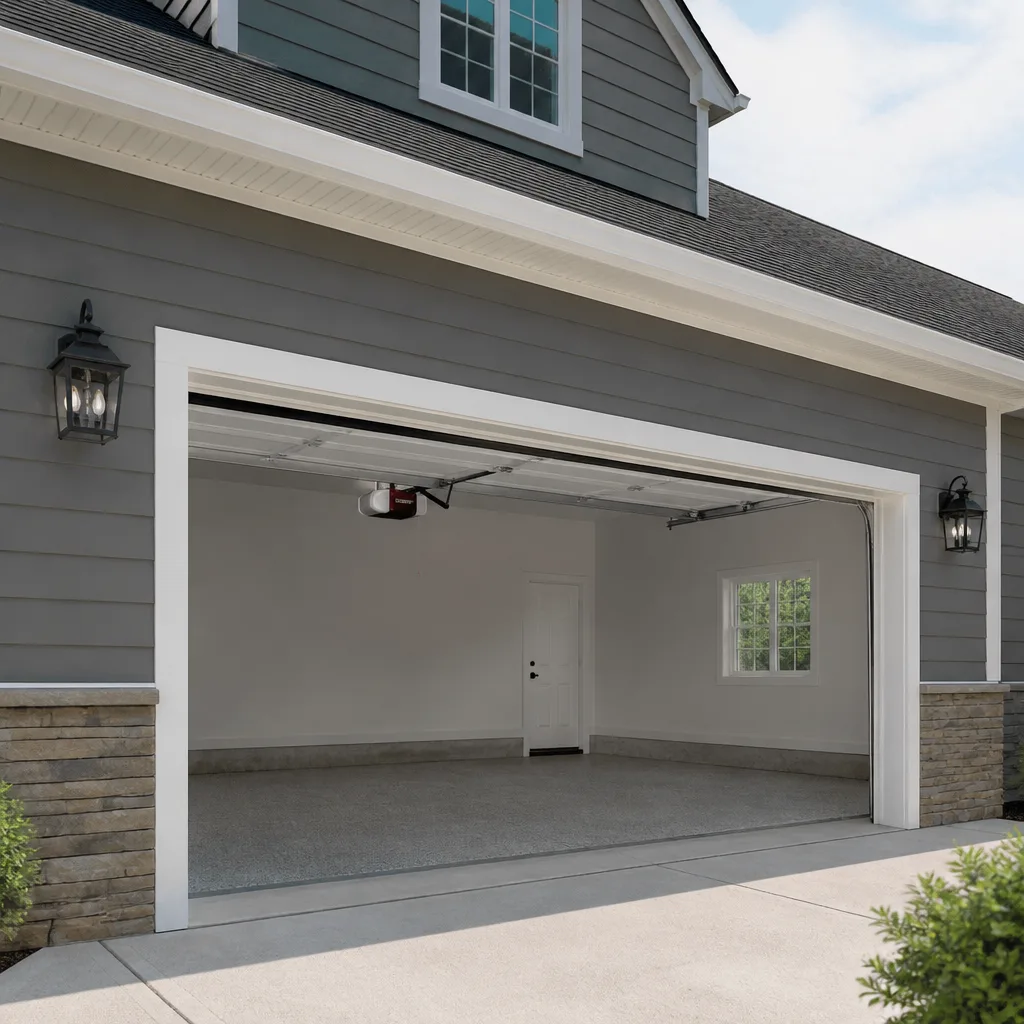 LiftMaster openers
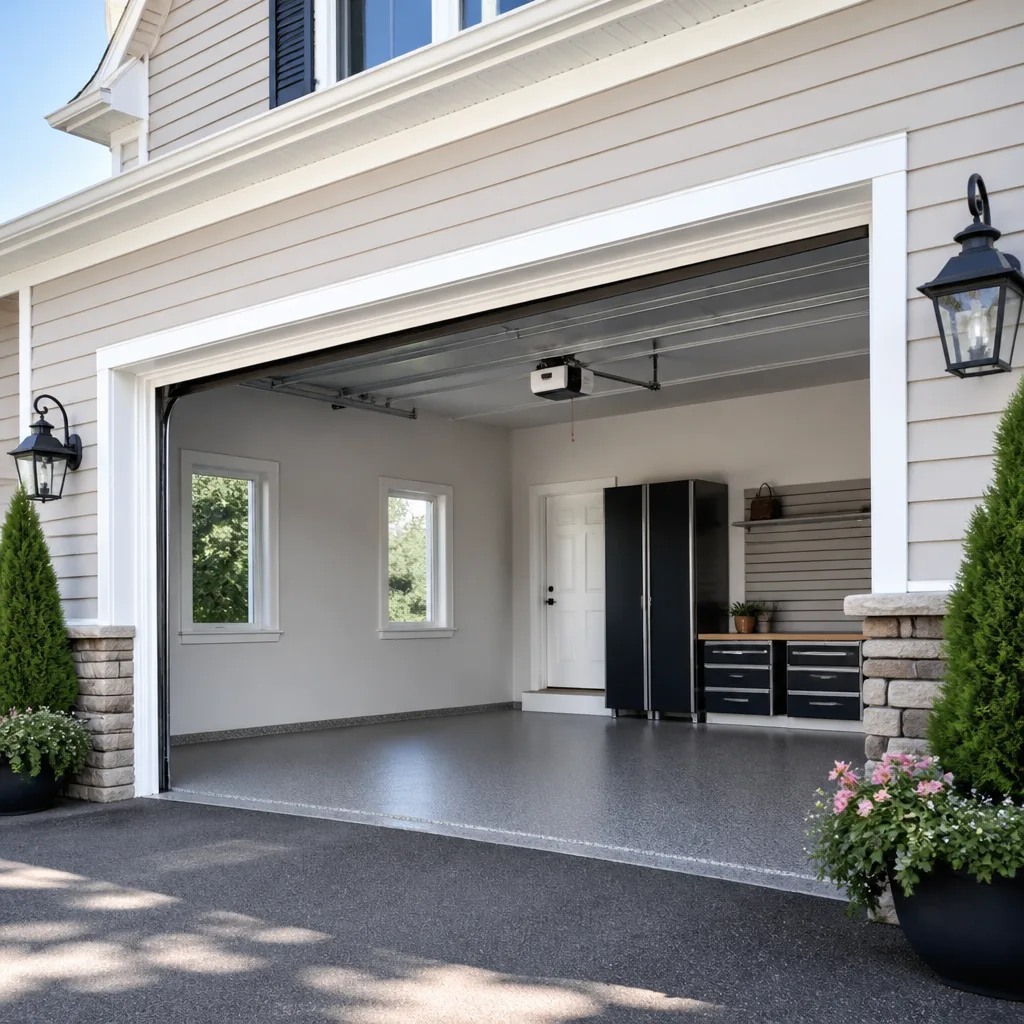 Chamberlain openers
Full 25-point door and opener safety check with every visit - springs, cables, rollers, tracks, and your LiftMaster or Chamberlain opener included
You get a price before we start. It does not change when the pro arrives.
Get your free estimateGarage Door Permits, Codes & Inspections in Glen Burnie, MD: What You Need to Know
Replacing the panels on your existing door is generally not a permitted job. Replacing the whole door system, or changing the opening the door hangs in, usually is. The confusion sits right on that line, and it cuts both ways: some contractors pull a permit for a simple swap and pass along a fee you didn’t need, while others skip one they were required to get. Nobody from the county calls to remind you either way. What this guide does is lay out the actual threshold Anne Arundel County works from, how a Glen Burnie home inspector reads unpermitted work, what Maryland’s fire-separation rules ask of an attached garage, and the one verification step almost every homeowner skips. It won’t make you a code official. It’ll help you ask the right questions before you sign.
Quick Answer
In Glen Burnie and the rest of Anne Arundel County, most garage door work that keeps the same opening and swaps parts or panels doesn’t require a permit, but a new door installation, a change to the door size, or any structural work on the header, jambs, or framing generally does. Fire separation for an attached garage, wind-load requirements on new installations, and the door’s attachment to the structure can add code requirements on top. When in doubt, call Anne Arundel County’s permit office directly and describe the job in plain terms; that one call settles more questions than any guide can.
Styles & brands we work with
- Raised-panel steel
- Carriage house
- Modern flush
- Full-view glass
- LiftMaster openers
- Chamberlain openers
Table of Contents
- Where the Permit Line Actually Falls in Anne Arundel County
- What Unpermitted Garage Door Work Looks Like on a Home Inspection
- Fire Separation and Door Material in an Attached Glen Burnie Garage
- How to Verify a Contractor Pulled the Permit
- Wind Load, Energy Code, and New Door Installations
- How Glen Burnie Weather and Housing Shape Door Wear
- Openers, Safety Reversal, and Electrical Rules
- Disclosure, Resale, and What to Do Next
Where the Permit Line Actually Falls in Anne Arundel County
The practical way to think about it: does the job change the structure, or does it change the parts? Anne Arundel County’s permit office cares about the first. Parts are maintenance. Structure is construction. That distinction is the one homeowners need to carry into a conversation with any contractor who shows up at the door.
Here’s how the three categories break down in practice:
- Repair and replacement in kind. New torsion springs, cables, rollers, hinges, a bent bottom bracket, an opener swap, or replacing damaged panels on an existing track and opening. Typically no permit. This is the bulk of what any Glen Burnie garage door company does day to day.
- Full door replacement with the same opening. Some jurisdictions treat this as a like-for-like swap and don’t require a permit; others want one for any new door. Anne Arundel County sits closer to the second in most cases, especially when the door’s weight, width, or material changes. Ask the county and get the answer in writing.
- Structural change. Raising the header, widening the opening, adding or moving a support post, re-framing around an opening, or converting a carport into an enclosed garage. A permit is required, and often engineering. This is not a repair; it’s construction.
Where it gets muddy in Glen Burnie is in the housing stock. A lot of the neighborhoods here have homes from several distinct building eras: the post-war bungalows, the 1960s and 1970s splits and ranches, and the newer colonial-style builds further out. A door replacement on a 1960s single-car opening behaves nothing like a replacement on a modern two-car door. Sometimes a door “replacement” is really a door plus a track upgrade plus a header adjustment, because the original opening was sized for a lighter door than the owner wants. The moment the header gets modified, you’re in permit territory.
One more thing worth knowing. The permit threshold isn’t just about whether someone will show up to inspect. It’s about whether the file exists. When work happens without a permit and without an inspection, the record of it never enters the county’s system. Years later, when you’re selling, that absence can become a problem. Read more about how we approach garage door repair in a way that keeps a clean paper trail when one is needed.
What Unpermitted Garage Door Work Looks Like on a Home Inspection
Home inspectors don’t pull permit records on every item in a house, but they do flag visible discrepancies and structural changes without documentation. Garage door work shows up in a handful of recognizable patterns. If a seller’s disclosure lists no permit for a job that looks structural, an inspector will note it and a buyer’s agent will ask about it.
The patterns we’ve seen flagged most often:
- A door that’s wider or taller than the opening framing suggests, or a header that’s obviously been rebuilt with newer lumber.
- A track system mounted to framing that looks retrofitted, with added blocking or shims that didn’t come with the original construction.
- An opener mounted to a ceiling with no dedicated circuit, or wired into an outlet that shouldn’t be feeding a motor.
- Panel seams or gaps along the sides of an opening where the trim was cut back and re-attached.
- Fire-rated door requirements for attached garages that weren’t met – a hollow-core or non-rated door where a rated one is expected.
- Missing safety reverse or photo-eye features on an older opener that should have been replaced with the door.
None of these are fatal on their own. What matters is what happens after they’re flagged. A buyer’s agent will ask whether the work was permitted. If the answer is “we don’t know,” the conversation turns into a price negotiation or a repair demand, and the seller is suddenly paying for a permit retroactively plus whatever corrections the county wants, plus the delay. In Glen Burnie’s resale market, a clean disclosure shortens closing. A disclosure with an unexplained structural change lengthens it.
There’s a second-order effect that matters just as much. When unpermitted work gets flagged, the corrections are almost always done by whoever the buyer hires, not by whoever did the original work. That means the second homeowner pays for the first homeowner’s shortcut. If you’re planning to sell within a few years, the question isn’t “will anyone notice?” It’s “what will it cost to make this a non-issue?”
Fire Separation and Door Material in an Attached Glen Burnie Garage
An attached garage is treated differently from a detached one for a simple reason: it shares a wall and often a ceiling with the house. Maryland’s residential code follows the model codes on this, and the model codes ask for a fire-separation assembly between the garage and the living space – typically a rated wall and, where the garage door connects to the house, a door rated for the same purpose. This is the section that catches Glen Burnie homeowners off guard when they replace a door, because the material and thickness of the new door affect how the opening performs.
For the vehicle door itself, the code requirements are mostly about wind load, attachment, and, in some cases, the door’s behavior under fire conditions. For the pass-through door between the garage and the house, the requirements are clearer: a rated door, self-closing hardware, and a proper threshold. If your Glen Burnie home has a hollow-core door between the garage and the kitchen, that’s a fire-separation issue independent of the garage door itself, and it comes up on inspections regularly.
A few things to check before choosing a replacement:
- Confirm the wall rating. Ask the county what rating applies where your garage wall meets the house. It’s often specified on the original permit drawings if you can find them.
- Match the door to the opening. Don’t drop a substantially lighter door into an opening that previously held a heavier one without confirming the springs, track, and header are up to it. The door’s weight determined the original spring sizing; changing the door without changing the springs is a safety problem, not just a performance problem.
- Check the pass-through door separately. Rated door, self-closer, proper seal. This is where most attached-garage fire-separation failures show up.
- Don’t seal or block the required clearances. Insulation, weatherstripping, and added trim are easy wins for energy performance and easy ways to accidentally compromise a rated assembly if they go in the wrong place.
If you’re changing the vehicle door to a heavier or differently-rated model, this is exactly the moment to call the county and ask what they want to see. The garage door spring repair conversation follows the same logic: a spring sized for the old door won’t be right for the new one, and matching the spring to the door is a job for someone who does it every day.
How to Verify a Contractor Pulled the Permit
The one step almost every homeowner skips is confirming the permit was actually pulled. It’s not enough to ask. Permits are pulled by the licensed contractor, filed under an address, and visible in the county’s public system. The homeowner can look. Most don’t. Here’s how.
- Ask for the permit number before work starts. Not after. Before. If the contractor hasn’t pulled it yet, ask why. If the answer is “we’ll get it the day of,” that’s a yellow flag on anything structural.
- Verify it in the county’s online permit search. Anne Arundel County maintains an online permit lookup. Search by address and confirm the permit exists, matches the scope of work, and lists the correct contractor.
- Confirm the contractor’s name on the permit matches the contractor doing the work. A permit pulled under a different name than the crew that shows up is a problem. It can mean the work is being subbed to someone the county hasn’t screened.
- Watch for the inspection milestone. Structural work requires an inspection before the job is closed out. If the contractor frames the inspection as an optional hassle, they’re describing their own workflow, not the county’s.
- Get the final inspection sign-off at completion. That document is what you need if you ever sell. Keep it with your home records next to the door’s warranty paperwork.
- Ask who schedules the inspection. Some contractors handle it. Some leave it to you. Either way, know before the job starts, so it doesn’t fall through.
What do you do if you discover, years later, that a previous owner’s work was never permitted? Call the county and ask what they want. Sometimes the answer is “provide documentation and we’ll regularize it.” Sometimes it’s “it needs an inspection, and if it fails, it needs corrections.” Either way, knowing is better than discovering it at closing. The Glen Burnie Garage Door Repair Pros team sees this situation often enough that we treat a clean paper trail as part of the job on any structural work.
Wind Load, Energy Code, and New Door Installations
New door installations in Maryland’s climate zone bring in two code areas that don’t come up on a repair. Wind load and energy performance. Both apply to the door as a component of the building envelope, and both can affect what door you can legally install at a given opening.
Wind load is the load the door is designed to withstand from wind pressure against its face. Modern residential codes set design wind speeds by region, and garage doors, being the largest openings in the envelope, are treated seriously. A door rated for a lower design wind speed than the code calls for is a non-compliant installation, even if it hangs and operates correctly. For most homes, this means choosing a door from the manufacturer’s catalog that carries the appropriate wind-load rating for the home’s exposure and location. Any reputable dealer can confirm this from the manufacturer’s data. A LiftMaster or a Chamberlain opener, by contrast, doesn’t carry a wind-load rating at all, because openers don’t face the weather.
Energy performance is the second area. Doors carry a rated U-value or R-value depending on the manufacturer’s published data. In Maryland’s climate zone, the code sets minimums for the envelope, and a garage door attached to a conditioned garage is part of that envelope. The exact requirement depends on your home, so the door you select needs to match. Insulated doors from Clopay, Amarr, Wayne Dalton, Raynor, and Craftsman all publish their ratings; a good installer will match the door to the envelope requirement rather than selling you the cheapest door on the truck. That’s the difference between “we carry a door” and “we carry the right door.”
Both of these are reasons to buy a new door through someone who does the work as a specialty rather than a generalist. The code doesn’t care about intent; it cares about the rating on the door and the installation details. If you’re unsure whether a wind-load or energy requirement applies at your address, ask the county and ask your dealer for the published ratings before you commit.
How Glen Burnie Weather and Housing Shape Door Wear
Anne Arundel County’s climate is a genuine stress test for a garage door. Hot, humid summers swell wood and work on finish; cold winters drive thermal cycling through the door and the hardware; freeze-thaw cycles move the ground under the slab and the driveway, and that eventually shows up at the door’s bottom seal. Homes in the area also vary widely in age and construction, which means two neighboring houses can have entirely different door systems under the same look.
What that means for code and inspection:
- Bottom seals and thresholds take the most wear. Freeze-thaw movement at the driveway is one cause of bottom-seal failure; a poor fit shows up on inspections as water intrusion at the garage.
- Wood composites and wood-faced doors swell across humid summers. If a door fits in October, check whether it still fits in July. Panels that bind against the frame can stress hinges and tracks.
- Spring sizing reflects the door’s actual weight. An insulated door from Clopay or Amarr is heavier than an uninsulated one, and the springs, cables, and opener all need to match the door that’s on the house.
- Attached garages with conditioned space see more condensation. That makes the fire-separation details matter more, because the wall loses less heat and the humidity finds the next cold surface.
A Glen Burnie home that’s had three owners over 30 years often has a door from one era, an opener from another, and a track system from a third. When the last installation was permitted, you can usually see what was done and check whether it was done correctly. When it wasn’t, the home inspector’s report is the first thing that forces the conversation. If you’re buying, the door’s permit history is worth looking up alongside the roof and the HVAC.
Openers, Safety Reversal, and Electrical Rules
The opener is the one part of the system with the clearest safety rules and the messiest compliance picture in older homes. Current safety standards for residential openers require external entrapment protection – the photo-eye system – and a reversing feature that responds to obstruction. Older openers without these features still work; that doesn’t make them compliant with the standard a new installation would meet.
When you replace a door, the new door’s weight and travel often mean the opener should be replaced or at least adjusted. If the installer brings in a new LiftMaster or Chamberlain opener, the electrical side comes into play. The opener needs a dedicated circuit, properly grounded, with a disconnect within sight, and no extension-cord wiring. That last detail matters most in older Glen Burnie garages where the opener was wired into an existing outlet years ago. A licensed electrician should handle the wiring; the opener’s internal connections aren’t a permit item by themselves, but adding a circuit is. When in doubt, ask the county what they want to see documented.
The safety reversal check itself is something any homeowner can verify. Place a small object in the door’s path and run the door down. It should reverse. If it doesn’t, the system isn’t’ performing as designed, and the door shouldn’t be operated unattended. Do not attempt to adjust the springs or the cables to compensate for a door that’s binding. Torsion springs and the cables they load sit under extremely high tension, and the injuries that come from working on them are not rare. This is one job to leave to a trained technician. We treat garage door opener repair and spring work as the two areas where specialist attention pays for itself.
Disclosure, Resale, and What to Do Next
The simplest way to protect yourself is to keep a file. When work is permitted, keep the permit number. When work is completed, keep the final inspection sign-off. When you replace a door, keep the manufacturer’s wind-load and energy documentation. When the opener is replaced, keep the model paperwork. That file is what you hand a buyer’s agent when the question comes up, and it removes nearly all the leverage a buyer would otherwise have.
If the file doesn’t exist because work was done before you owned the home, the answer isn’t to hide it. Call the county, describe what’s there, and ask how to regularize it. Sometimes a new inspection is enough. Sometimes corrections are needed. Either is better than an undisclosed structural change showing up on a home inspection report weeks before closing.
And if you’re still planning the work, that’s the easy version. Get the scope clear first: is this a repair or a replacement, and does the scope touch the structure? Ask your contractor if a permit is required, then verify it in the county’s system before work starts. If the contractor tells you no permit is needed and the job involves structural changes, get a second opinion. Real experience shows in a willingness to answer that question, not brush it aside.
Common Mistakes to Avoid
- Assuming no permit is needed because the job “looks like a replacement.” A like-for-like swap and a structural change can look identical on paper. Check the scope: if the header, jamb, or framing changes, get a permit. If the door model and opening stay identical, ask the county for their position before assuming.
- Never verifying the permit the contractor claims to have pulled. The county’s online permit lookup is a two-minute search. Do it before work starts, not after the truck leaves.
- Replacing a door without resizing the springs. A new insulated door from Clopay or Amarr weighs more than the door it replaces. The springs, cables, and opener all need to match. Springs under tension are not a DIY adjustment.
- Ignoring the pass-through door between garage and house. Fire separation in an attached Glen Burnie garage depends on the rated door and self-closer between the garage and the living space, not just on the vehicle door.
- Skipping the final inspection sign-off. The permit isn’t fully closed without it. Without the sign-off, the paperwork exists but doesn’t help you at resale.
- Letting the opener be wired into an existing outlet without a dedicated circuit. Older Glen Burnie garages frequently have this. A new opener deserves a proper circuit, and adding one is a permit item.
- Treating the buyer’s home inspector as the first line of defense. By the time an inspector flags unpermitted work, you’re paying for it yourself. Getting it right the first time is cheaper than correcting it at closing.
See the difference
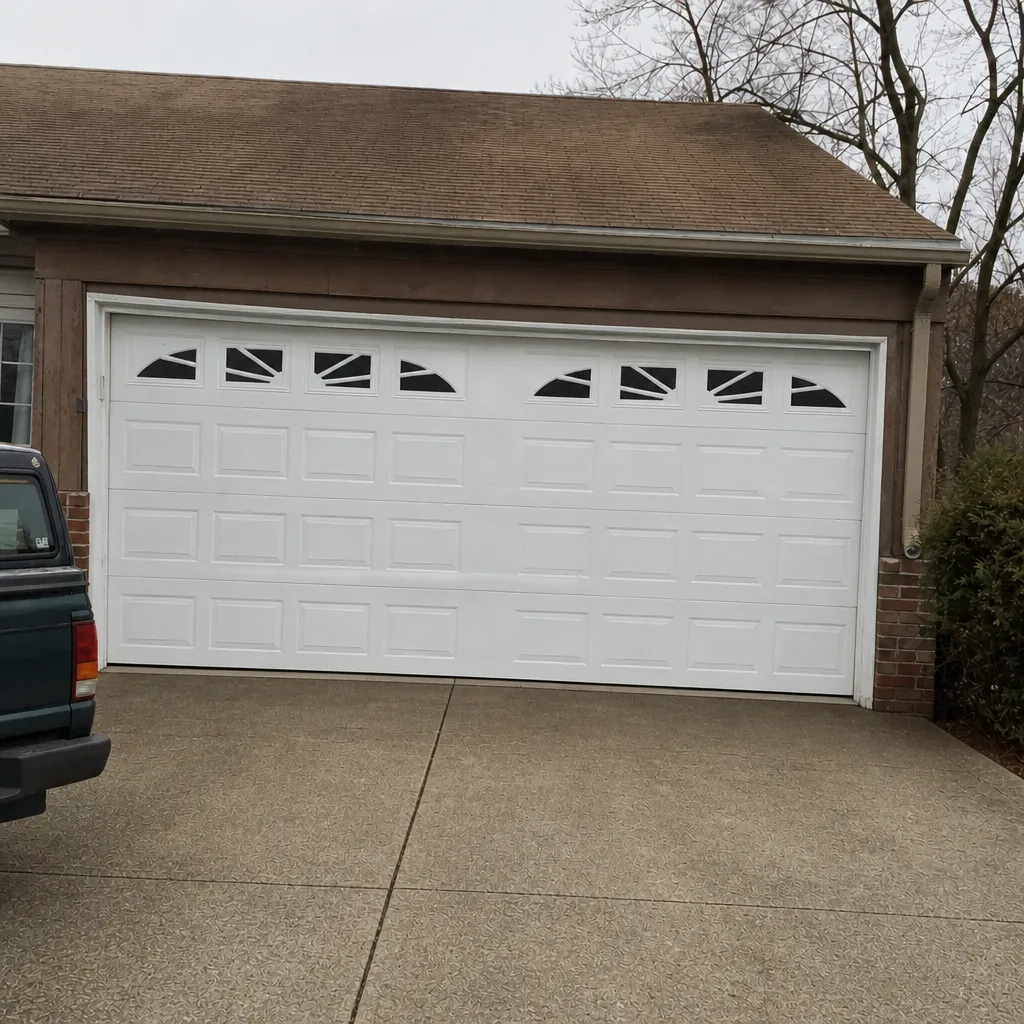
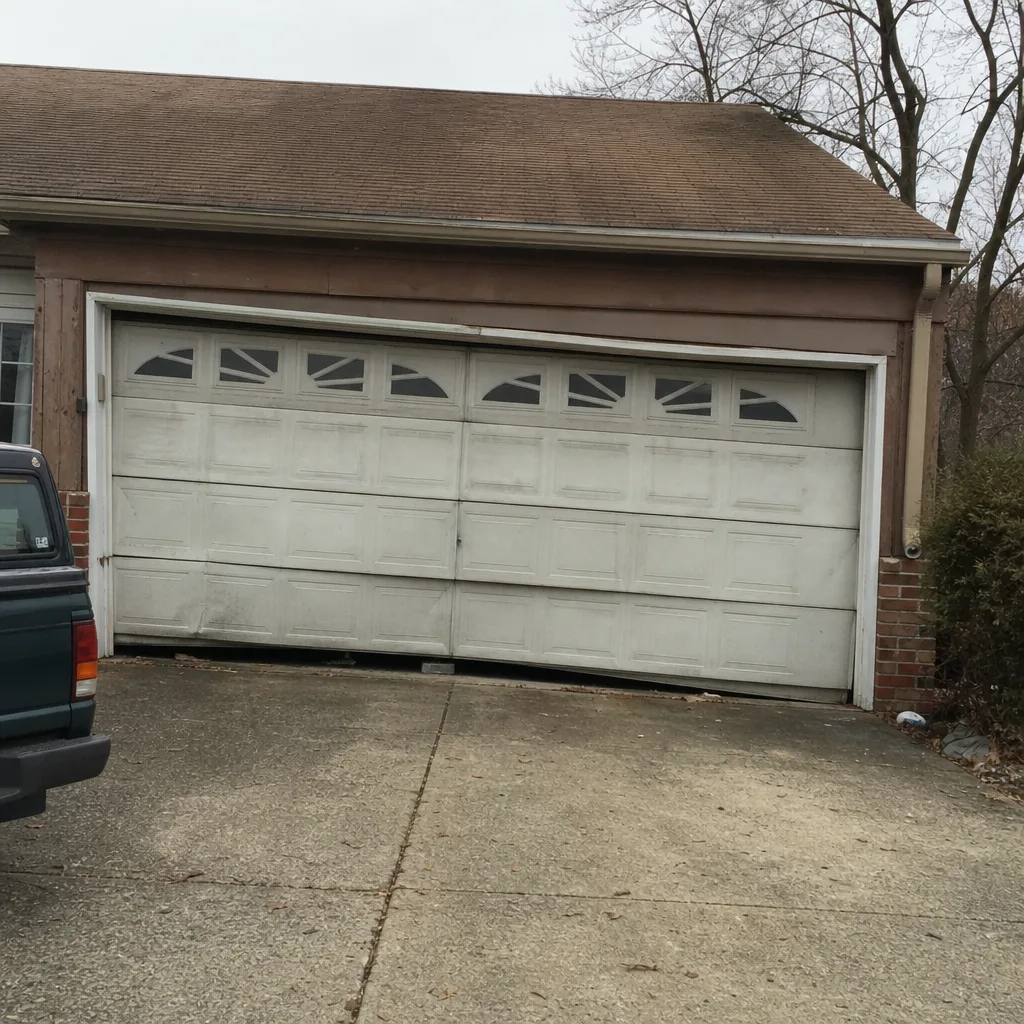 Before
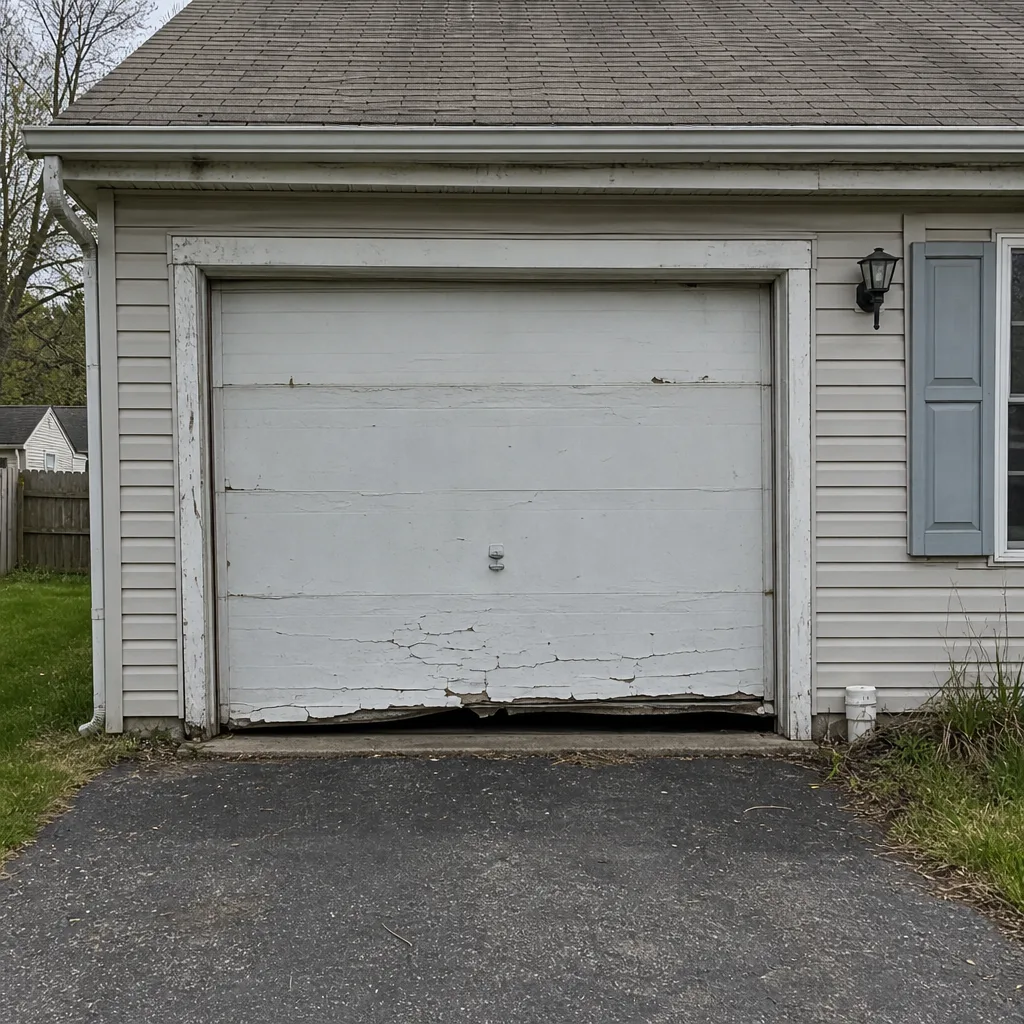
 After
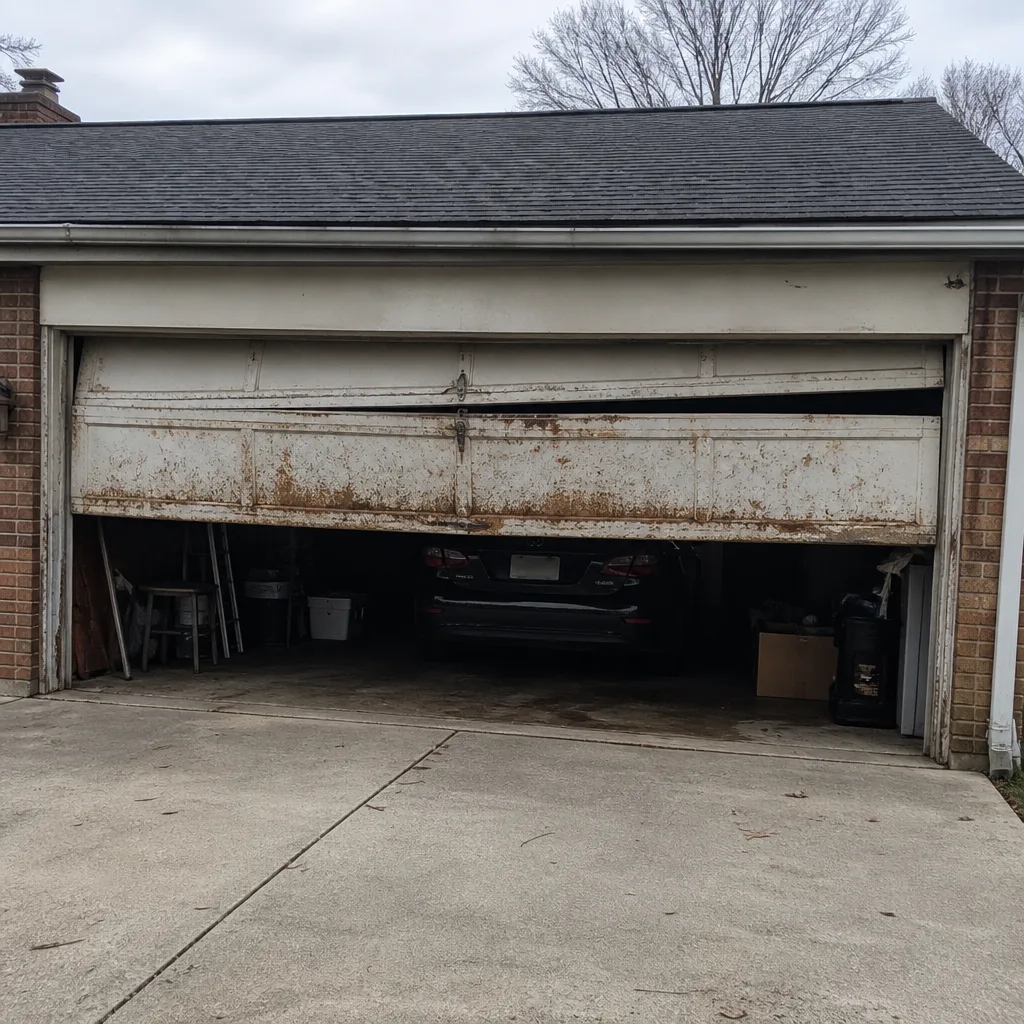
 Before
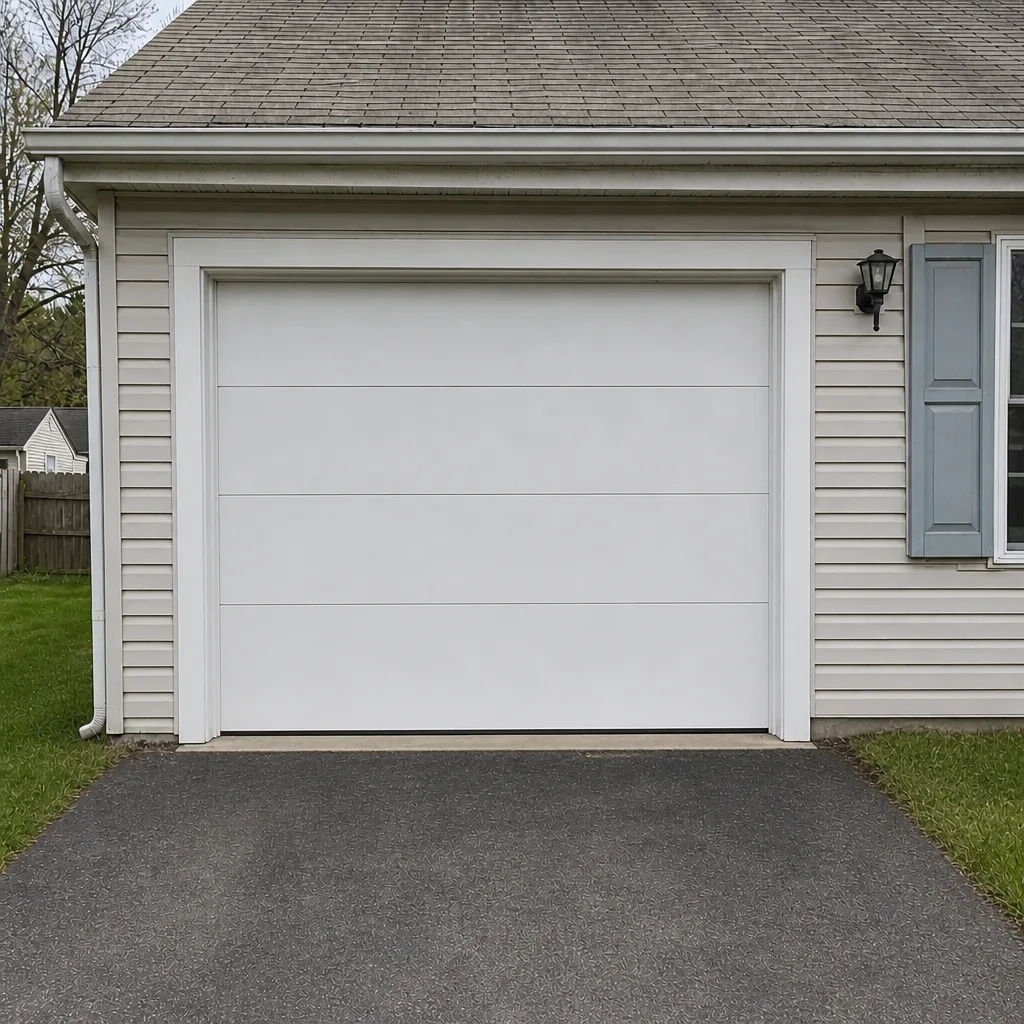 After
 Before
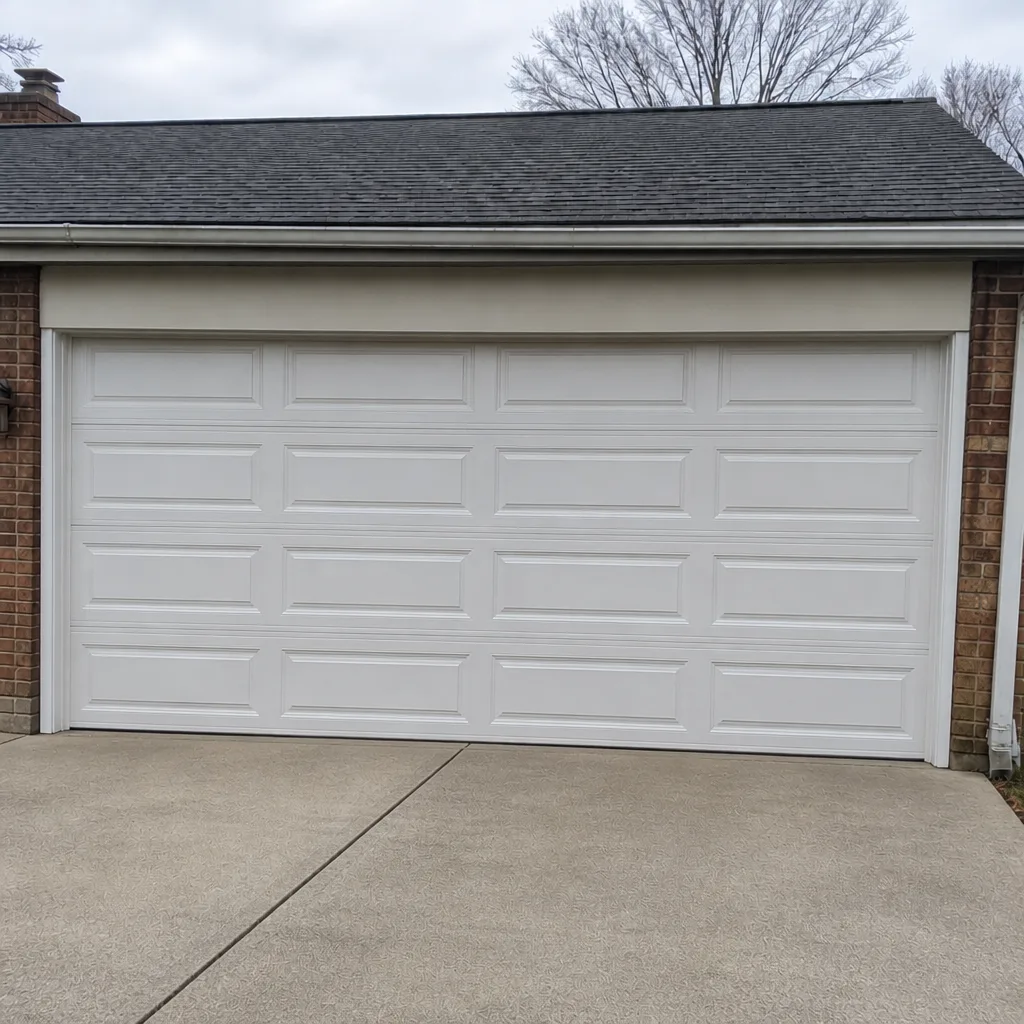 After
When to Call a Professional
Some garage door issues are purely cosmetic and can wait. Others shouldn’t. Call a professional if any of these apply to your Glen Burnie home: a torsion spring has broken or a cable has snapped; the door is binding, crooked, or hanging off its track; the opener reverses on its own or fails the obstruction test; you’re changing door material, weight, or size and need the springs and header matched to the new door; you’re replacing a door and want the permit and inspection handled correctly; or you’re preparing to sell and want the system in a documented, defensible state before any buyer looks at it. Structural changes and spring work both carry a real risk of injury and a real risk of code trouble if done without the right paperwork.
Glen Burnie Garage Door Repair Pros offers free estimates in Glen Burnie. Call (855) 550-7498. We answer 24/7. Fast dispatch from 7am to 7pm, Sunday through Friday.
Frequently Asked Questions
It depends on the scope. A like-for-like door replacement on the same opening is often treated as a maintenance item by Anne Arundel County, but a change in door size, weight, material, or any structural work around the opening generally requires a permit. The only reliable answer comes from the county’s permit office, so call them and describe the job in plain terms before you schedule the install. Call (855) 550-7498 for a free estimate on the door itself.
Nothing happens immediately. The problem surfaces later, usually at a home inspection or on a seller’s disclosure, where unpermitted structural work becomes a negotiating issue. The buyer’s agent will ask about the permit, and if there isn’t one, corrections may be required by the county before the work is accepted. The fix is to call the county proactively and ask how to regularize the work; sometimes an inspection is enough, sometimes not. Call (855) 550-7498 if you want an experienced technician to look at the door before the county inspection.
The vehicle door itself isn’t typically the fire-rated component in the assembly; the pass-through door between the garage and the living space is. Attached garages in Glen Burnie are held to fire-separation rules that generally require a rated door, self-closing hardware, and a proper threshold between the garage and the house. If you’re replacing the vehicle door, the fire-separation conversation often turns to the pass-through door and the wall assembly, not the vehicle door’s material. Ask the county what rating applies at your address before choosing materials. Call (855) 550-7498 with questions about the door system.
Search the county’s online permit lookup by address and confirm the permit exists, matches the scope of work, and lists the correct contractor. Ask for the permit number before work starts, not after. Confirm the final inspection sign-off at completion, and keep it with your home records. If a contractor is vague about the permit, that’s a reason to look harder, not a reason to relax. Call (855) 550-7498 if you want to talk through what a job should include before it starts.
A homeowner can physically replace a door, but the risks are real and the paperwork is the same whether you or a contractor does the work. Torsion springs and cables sit under extremely high tension, and a mistake there can cause serious injury. The door’s weight also determines spring sizing, so a door swap without a spring change can be unsafe. If the work is structural, it needs a permit and inspections that a contractor handles routinely. Call (855) 550-7498 for a free estimate before you commit to a DIY approach.
Adding a new dedicated circuit for the opener usually requires a permit because it’s electrical work. Swapping an opener on an existing circuit is generally treated as a component replacement, though the safety features the new opener brings – photo-eye protection and the reversing test – still matter and should be verified at installation. If the opener is being wired into an older outlet from a previous installation, ask the county what they want documented. Call (855) 550-7498 with questions about a specific opener brand or system.
The Bottom Line
The permit picture in Glen Burnie comes down to one question: does the job touch the structure, or does it only touch the parts? Parts are maintenance. Structure is construction, and construction is what the county tracks. A like-for-like swap is usually a non-event. A new door with a modified opening, a heavier door, or any framing work is a permitted job, and the homeowner’s job is to verify the permit exists in the county’s system before work starts. Keep the permit number, keep the final inspection sign-off, and keep the manufacturer’s documentation for the door’s wind-load and energy ratings. That file is what you hand a buyer’s agent when the question comes up, and it’s what separates a clean sale from a negotiation. If you’re ready to talk about the door itself, call us.
Call (855) 550-7498 for a free estimate. We answer 24/7. Fast dispatch from 7am to 7pm, Sunday through Friday. Our technicians have up to 8 years of experience with LiftMaster, Chamberlain, Genie, Clopay, Amarr, Wayne Dalton, Craftsman, and Raynor systems, and garage doors are all we do.
Written by the team at Glen Burnie Garage Door Repair Pros.